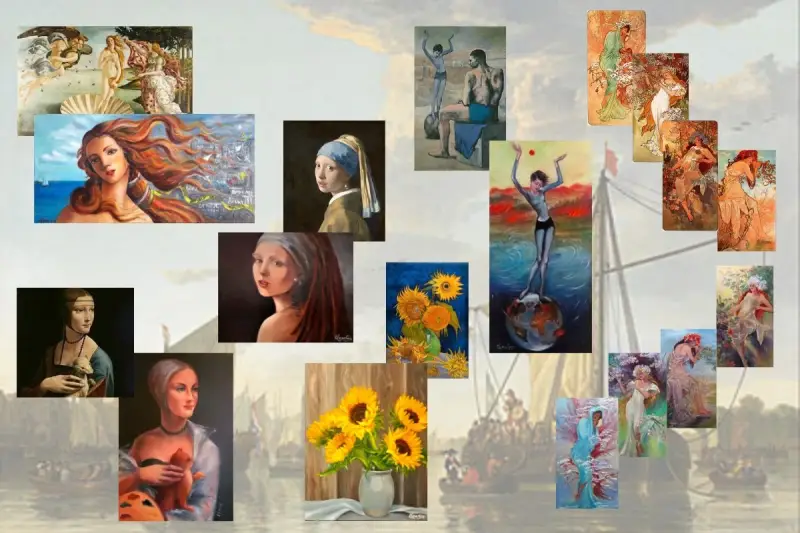
Contemporary reinterpretation of classical masterpieces, bridging Renaissance ideals and modern emotional landscapes.
From the Renaissance to the 21st Century:
Why Are Today’s Artists Rewriting the Old Masters?
This article reflects an art-historical perspective on contemporary figurative painting and its dialogue with European masters.
One afternoon in a modern studio, surrounded by unfinished canvases and fragments of art history, an artist asked a dangerous question: What would the old masters paint if they lived today?
That question became six paintings—each in conversation with a masterpiece that once defined its era, now reimagined for a world shaped by uncertainty, speed, and global tension.
Art doesn't progress by ignoring its history. It advances by challenging, accepting, and occasionally contradicting it. Over centuries, artists have returned to past masters' works not out of respect but out of necessity—some paintings pose concerns that every period must confront.
The six paintings here tell a story from Renaissance harmony to current discord. These modern responses to famous masterpieces show that although creative methods change, the core motivations—meaning, beauty, balance, and truth—remain.
Why Do the Old Masters Refuse to Stay in the Past?
When a modern artist engages with Botticelli, Leonardo, Vermeer, Van Gogh, Picasso, or Mucha, the goal is not replication. The goal is conversation.
Each historical masterpiece once responded to the tensions of its time: faith and humanism, reason and emotion, and order and chaos. Today’s dialogue reflects a world shaped by rapid change, global instability, and personal introspection. What may differ are materials, colours, or symbols—but the emotional core remains strikingly familiar.
In these six paintings, the past does not sit quietly behind museum glass. It walks beside us.
Botticelli in the 21st Century: Reimagining Venus.
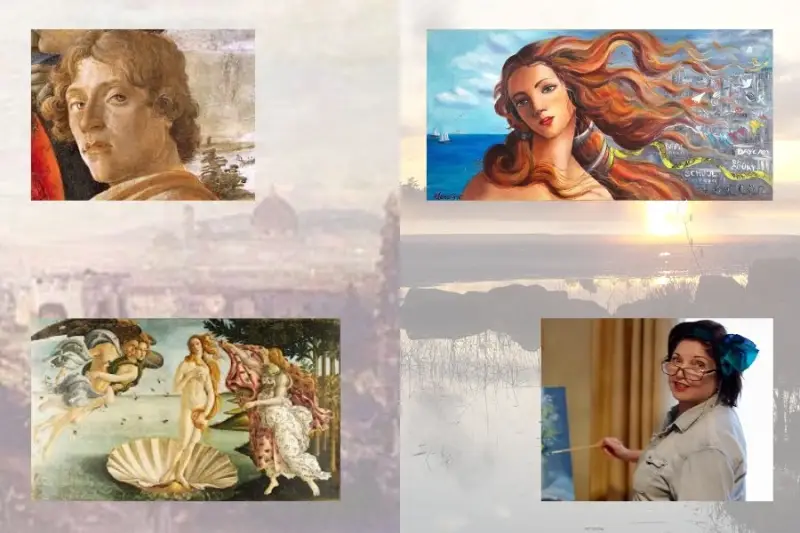
From Botticelli’s Venus to a woman shaped by the 21st century—beauty reborn through experience.
Botticelli’s Venus emerged from the sea as an ideal—pure, divine, and untouched by human contradiction. In The Life of Venus in the 21st Century by ElenaG, she steps fully into reality.
This modern Venus is not frozen in myth. She has lived, chosen, and endured. Beauty here is not perfection but resilience. The painting suggests that in our time, Venus is reborn not through divine will, but through personal transformation—an emblem of femininity shaped by experience rather than idealization.
From Leonardo to Today: Portraiture Then and Now.
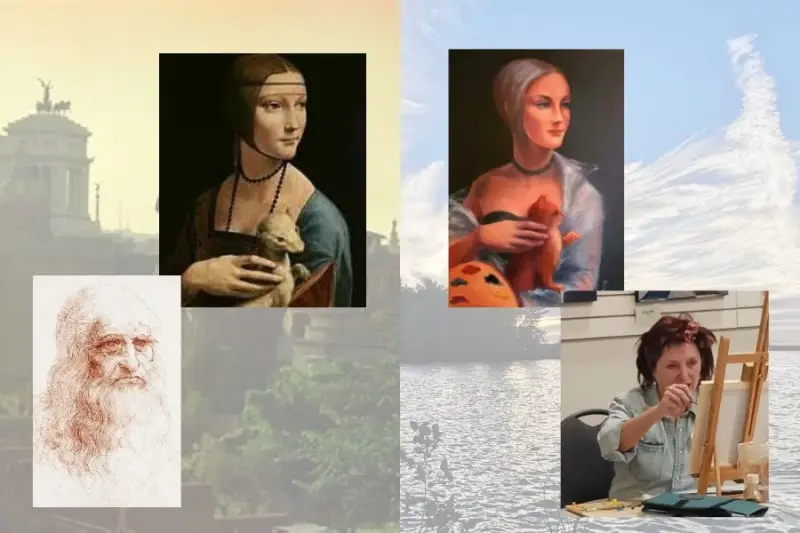
Leonardo spoke of intellect. Today, we speak of intimacy.
Leonardo’s Lady with an Ermine spoke of intellect, restraint, and quiet authority. Artist Elena G creates her painting titled "Art & Life," which softens the distance between the viewer and the subject.
The cat replaces the ermine’s symbolism with intimacy. The subject feels contemporary—present, warm, and unguarded. This is a portrait not of status, but of character. Where Renaissance portraiture emphasized control and hierarchy, this reinterpretation celebrates emotional authenticity and personal connection.
Vermeer’s Silence Across Time.
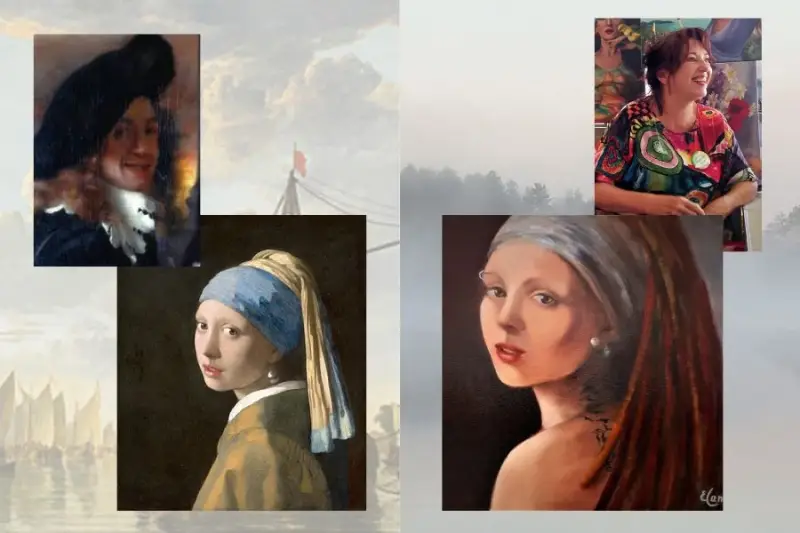
Across four centuries, the same quiet gaze still asks the same questions.
Vermeer’s girl exists in a suspended moment—timeless, silent, endlessly questioned. ElenaG preserves that moment in Across the Times, or The Girl with a Pearl Earring in the XXI, but its meaning shifts.
The modern figure meets the viewer’s gaze with quiet confidence. She is no longer a mystery defined by absence but a presence defined by awareness. The painting bridges centuries, reminding us that introspection, vulnerability, and strength are constants of the human condition.
Van Gogh’s Sunflowers in Contemporary Painting.

Van Gogh’s sunflowers burned. Ours endure.
Van Gogh’s sunflowers burned with urgency—painted as if time itself were running out. This contemporary interpretation, which is created by modern artist ElenaG, tempers that intensity with reflection.
The flowers remain radiant but calmer. They speak of continuity rather than crisis. In a world saturated with noise, these sunflowers offer a pause—a reminder that beauty can endure without anguish and that emotion need not always arrive in flames.
Picasso, Balance, and the Modern World.
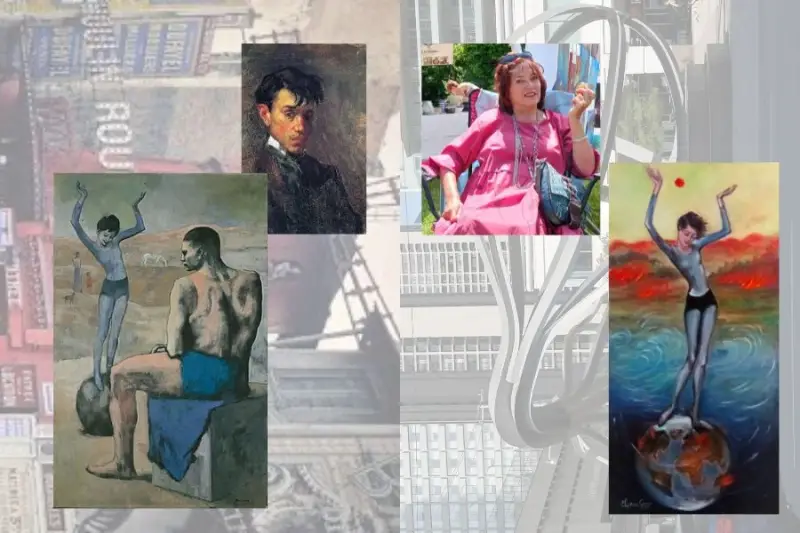
Balancing on the world itself—beauty, courage, and chaos in one moment.
Picasso depicted balance as fragility, with the acrobat poised above uncertainty and strength constantly tested. In “On the Top of the World’’ by the artist ElenaG, balance becomes global—and far more perilous—at a time when it feels increasingly fragile.
Here, a girl balances on a globe itself, surrounded by elemental forces and the shadow of war. Unlike Picasso’s quiet strength, this figure embodies modern instability. She does not merely balance for herself but for the world beneath her. The painting reflects our era’s tension: beauty and courage existing amid chaos, responsibility, and conflict.
Mucha’s Four Seasons Reborn.
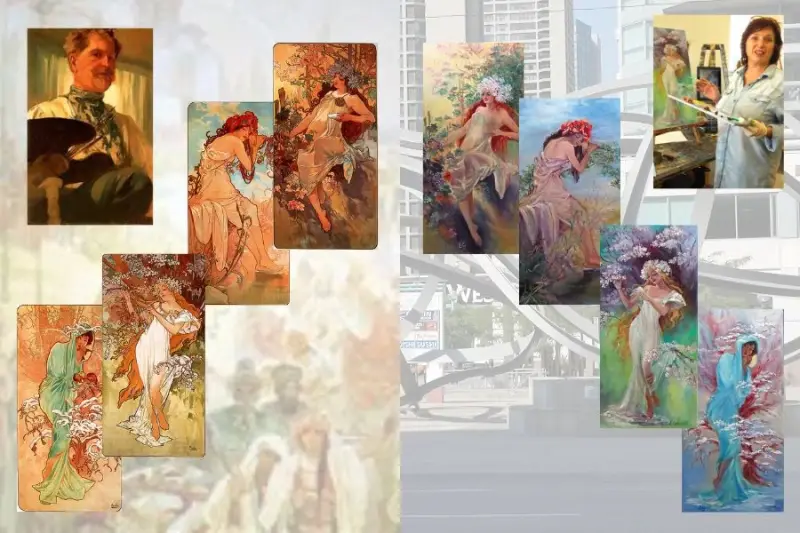
The seasons change. The human story continues.
Why These Reinterpretations Matter Today.
What unites these works is not homage, but intent. They remind us that art history is not a closed chapter—it is a living narrative.
Like a Dumas hero stepping out of history and into adventure, these paintings carry the spirit of the past into the uncertainties of the present. They tell us that artists across centuries share the same courage: to confront their world honestly and to leave behind images that ask future generations to do the same.
The old masters never truly belonged to museums alone. They belonged to moments of upheaval, transition, and change—much like our own.
By reimagining historical works today, contemporary artists do not simply preserve history; they allow it to continue evolving.
Everyone who wants to take a closer look at the ElenaG paintings mentioned in this article, click on https://www.artbyelenag.com/artwork-gallery
The bio of ElenaG is on the About Me page: https://www.artbyelenag.com/about-me.
Links for those who like art histories or canonical works, with their emotional visual language: https://en.wikipedia.org/wiki/Main_Page
https://www.uffizi.it/en/the-uffizi
I hope to meet you soon, my dear lover of artistic history, on the pages of our website.
Nik.
I came up with the blog article concept and edited it, and I used ChatGPT to compose the text.
Add comment
Comments