ElenaG: My Paintings—The Moment of Emotions Before They Fade.
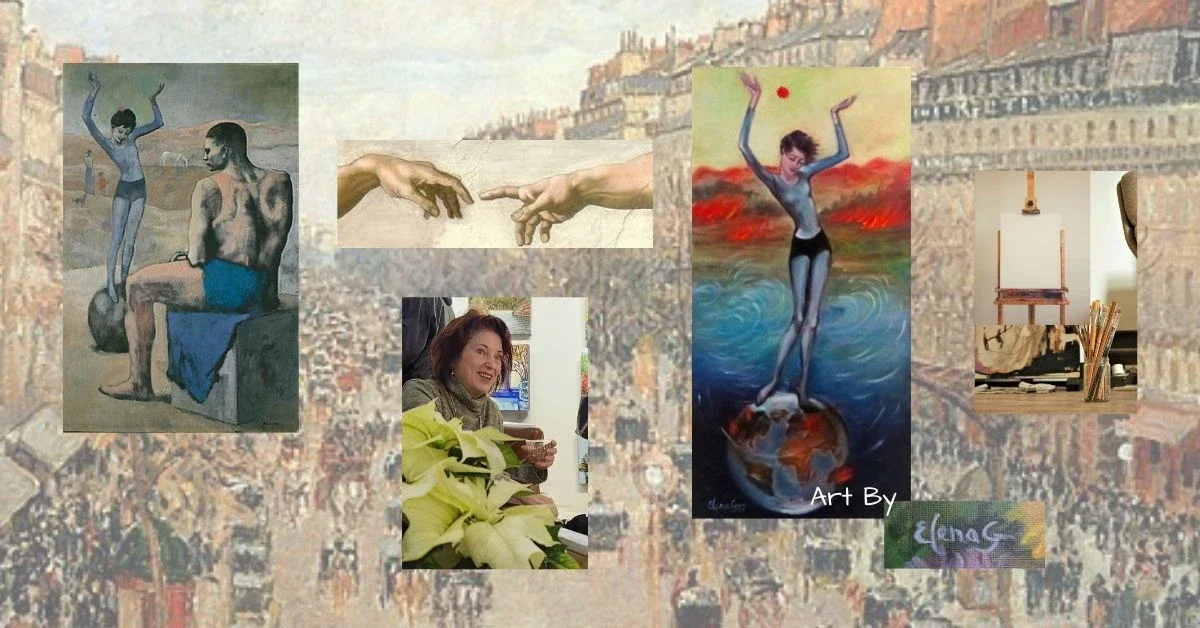
There’s a particular kind of persistence artists know well: an idea that quietly moves in, rearranges the furniture of your mind, and refuses to leave until you give it form.
When an idea refuses to let go, it can be difficult to move on.
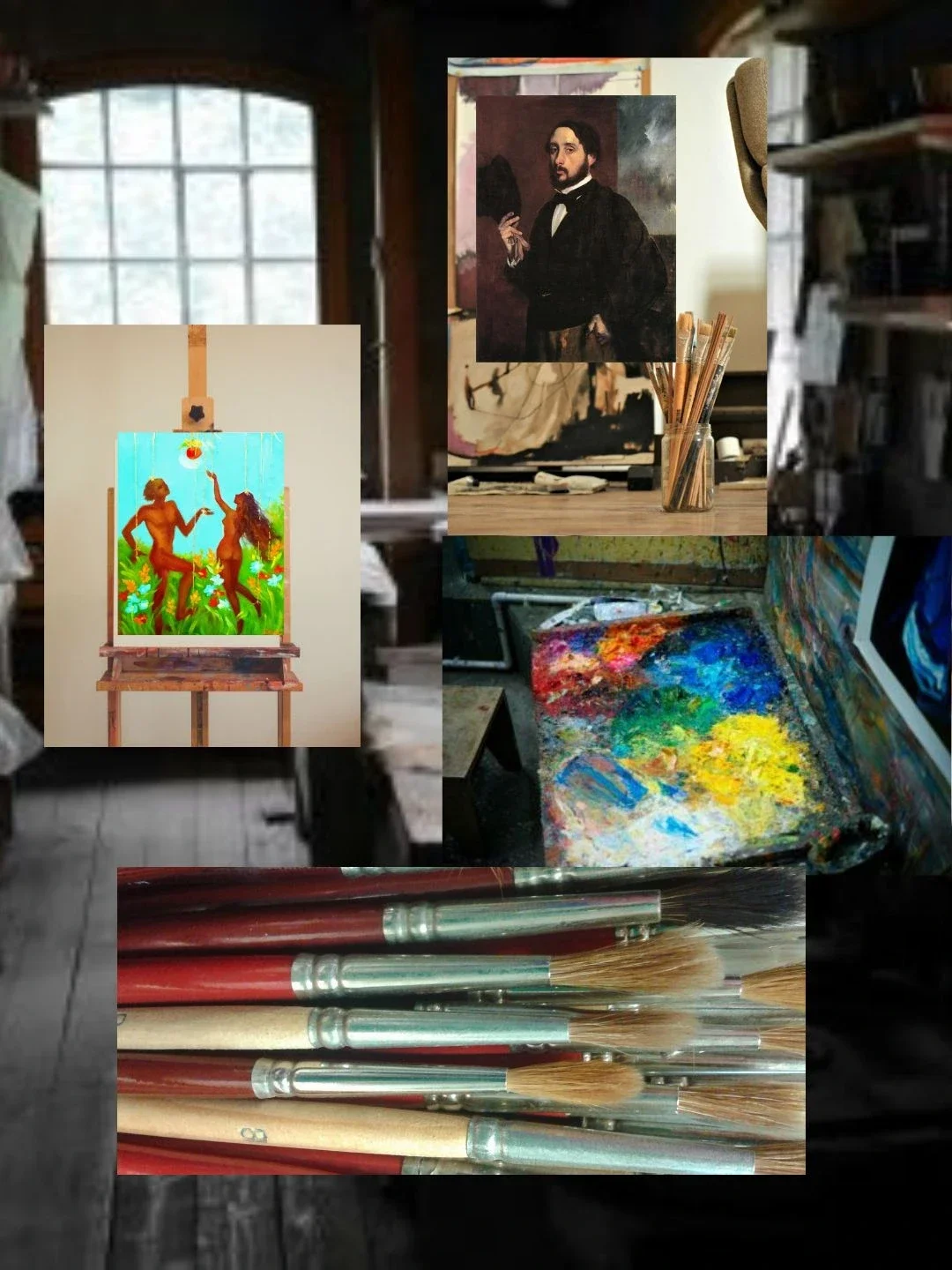
The painting changes because thinking changes. The thinking changes because the feeling deepens.
There’s a particular kind of persistence artists know well: an idea that quietly moves in, rearranges the furniture of your mind, and refuses to leave until you provide it form. For me, the act of standing before the easel is rarely dramatic—it’s almost automatic. By the time I pick up a brush, the idea has already lived a full life inside my head, evolving, reshaping itself, and insisting on becoming a composition.
And yet, that composition is never final.
What begins as a clear vision often shifts mid-process—nudged by new thoughts, unexpected harmonies, or a sudden curiosity about how light might fall differently across a shoulder, a cheek, or a fleeting gesture.
The painting changes because the thinking changes. The thinking changes because the feeling deepens.
I try to transmit at work; composition is not a rigid plan—it’s a living conversation.
The Quiet Centre: Emotion Over Everything.
Despite all these transformations, one thing remains constant: the emotional core.
Every brushstroke, every adjustment in light and shadow serves a single purpose—to capture the essential state of the person depicted.
Not just how they look, but how they feel in a particular, unrepeatable moment.
This is where her figurative painting finds its anchor.
The background may evolve, and the palette may shift, but the emotional truth remains the destination.
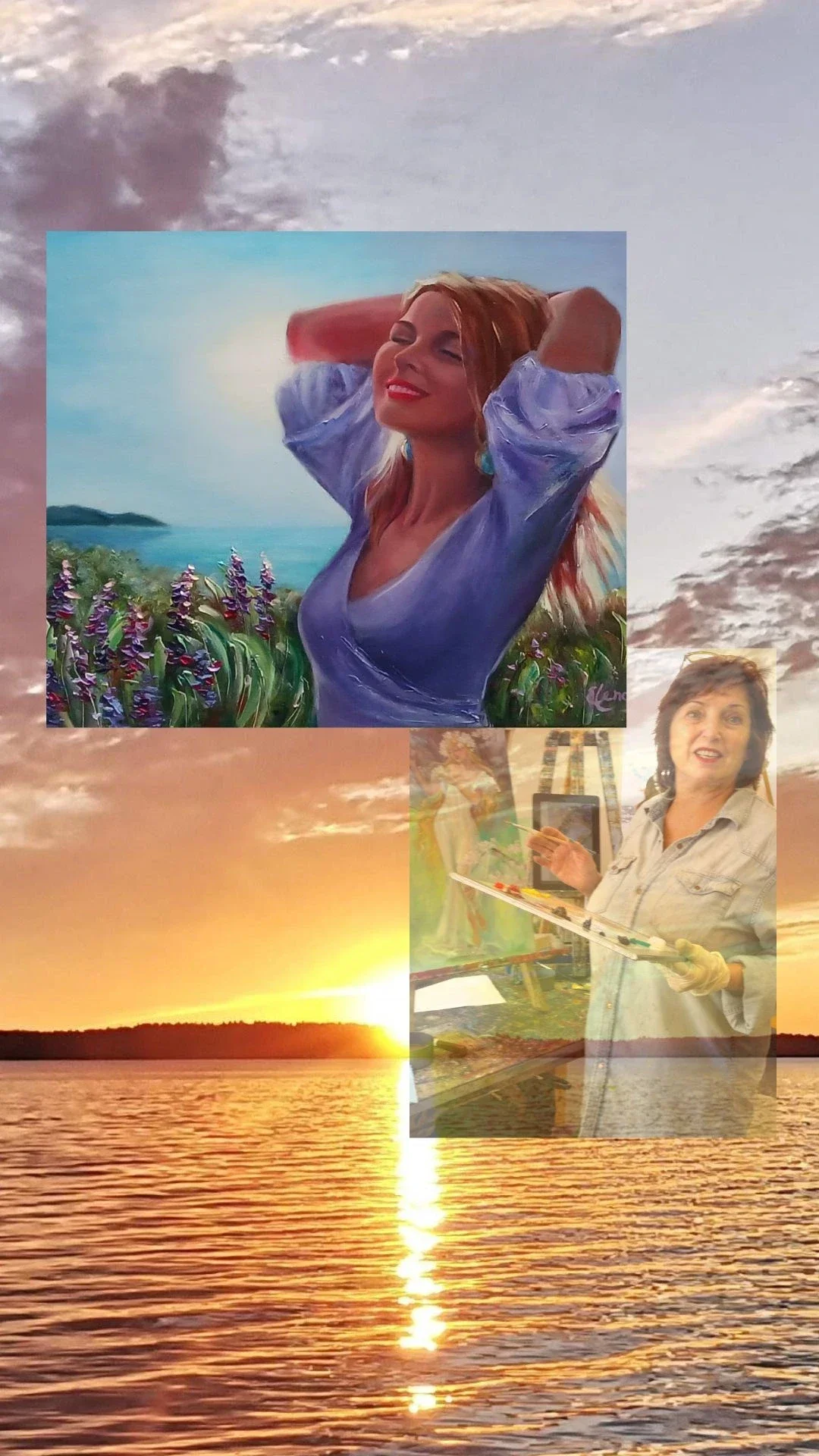
The background may evolve, and the palette may shift, but the emotional truth remains the destination.
Why Women and Children Appear (Without Being Invited).
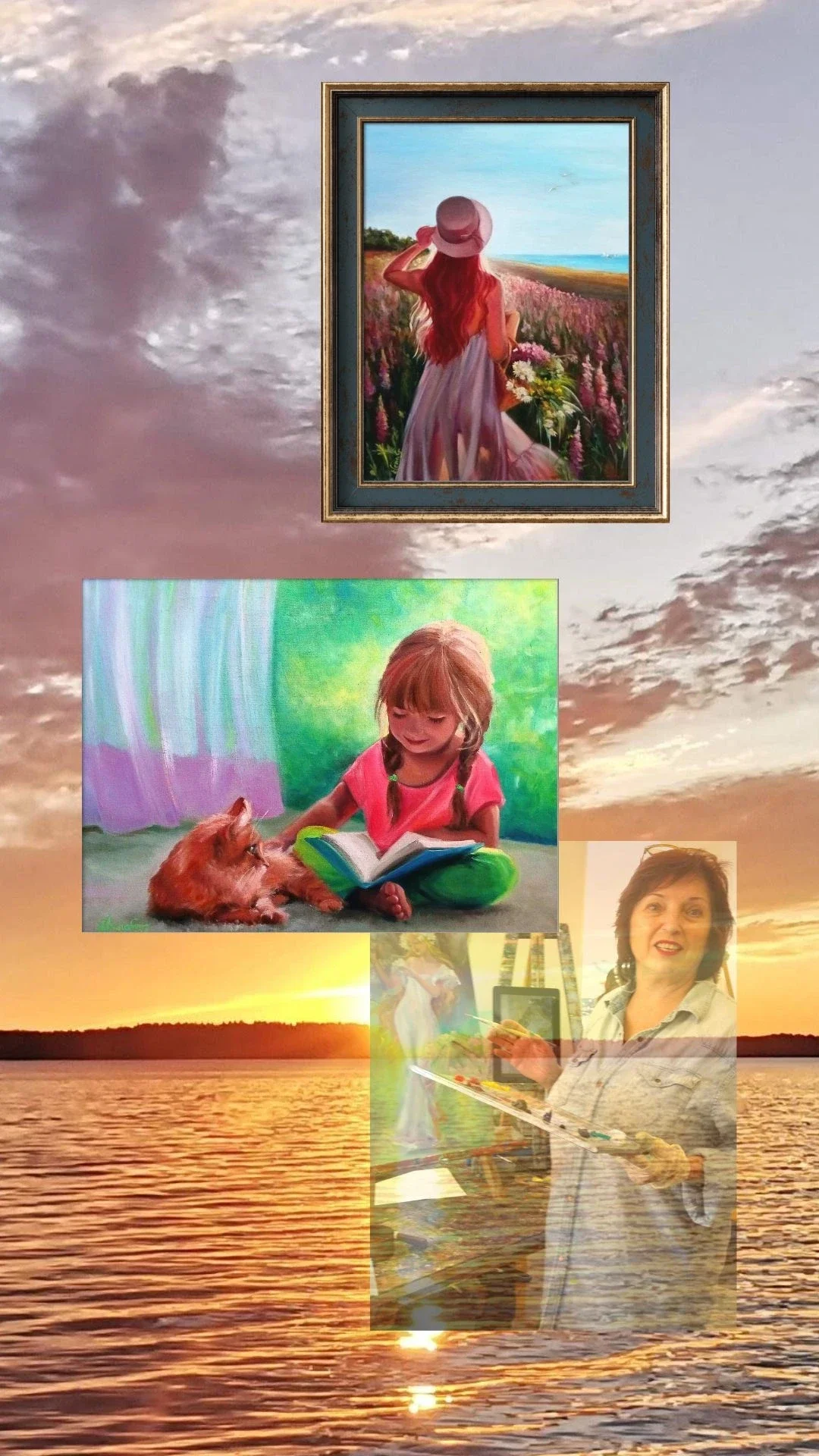
Women and children often inhabit my canvases. Why?
Because what is closest to you naturally finds its way into your work.
I don’t frame my work through an ideological lens. I don’t set out to make statements about gender.
And yet, women and children often inhabit my canvases.
Why?
Because what is closest to you naturally finds its way into your work.
It’s less a decision and more a reflex of the heart.
Take, for example, a moment both simple and profound: my granddaughter, when she was just two years old, encountered her very first puddle after a summer rain.
That tiny, sparkling universe of water becomes a stage for discovery—for joy, curiosity, and the pure astonishment of being alive.
Why wouldn't you paint that?
How could you resist preserving that exact second when the world suddenly becomes bigger, brighter, and wonderfully unpredictable?
Memory as a Silent Co-Author.
Not all subjects arrive in the present. Some emerge quietly from memory—those lingering emotional impressions that refuse to fade.
A trace of joy. A soft, unexplainable sadness. A warmth that belongs to no specific moment and yet feels entirely real.
From such fragments came a series of paintings: “Happy Day,” “Just Happy,” and “Wildflowers."
Each features young women in a summer meadow, suspended in that rare atmosphere where sunlight feels almost tangible—like something you could touch and carry with you.
There is a sense of ease in these works, a kind of unguarded serenity.
Interestingly, at art fairs, it was often men who lingered longest in front of these paintings—as if recognizing, perhaps unexpectedly, something familiar in that quiet happiness.
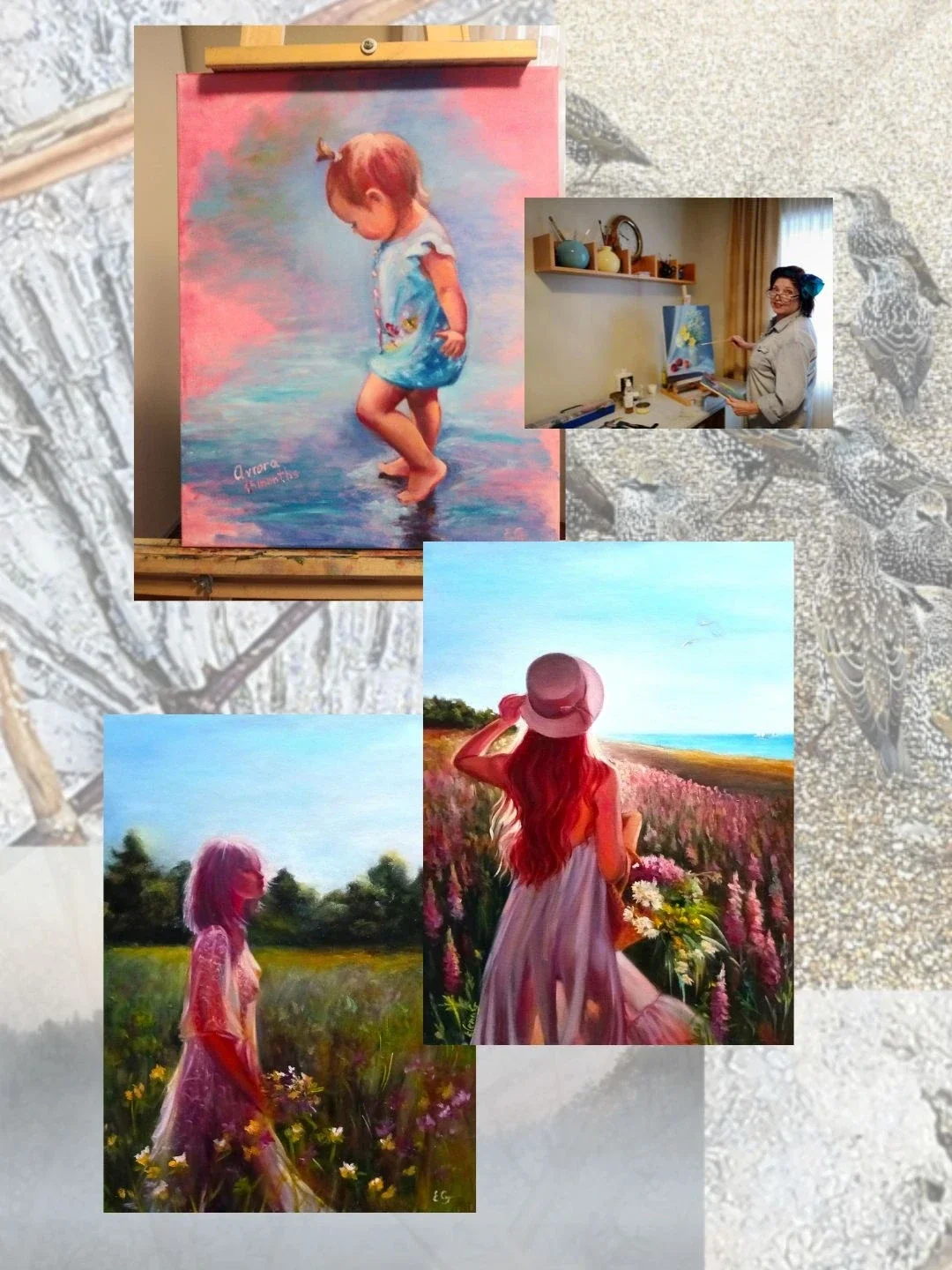
Each features young women in a summer meadow, suspended in that rare atmosphere where sunlight feels almost tangible—like something you could touch and carry with you.
Dreams, Literature, and the Space of Anticipation.
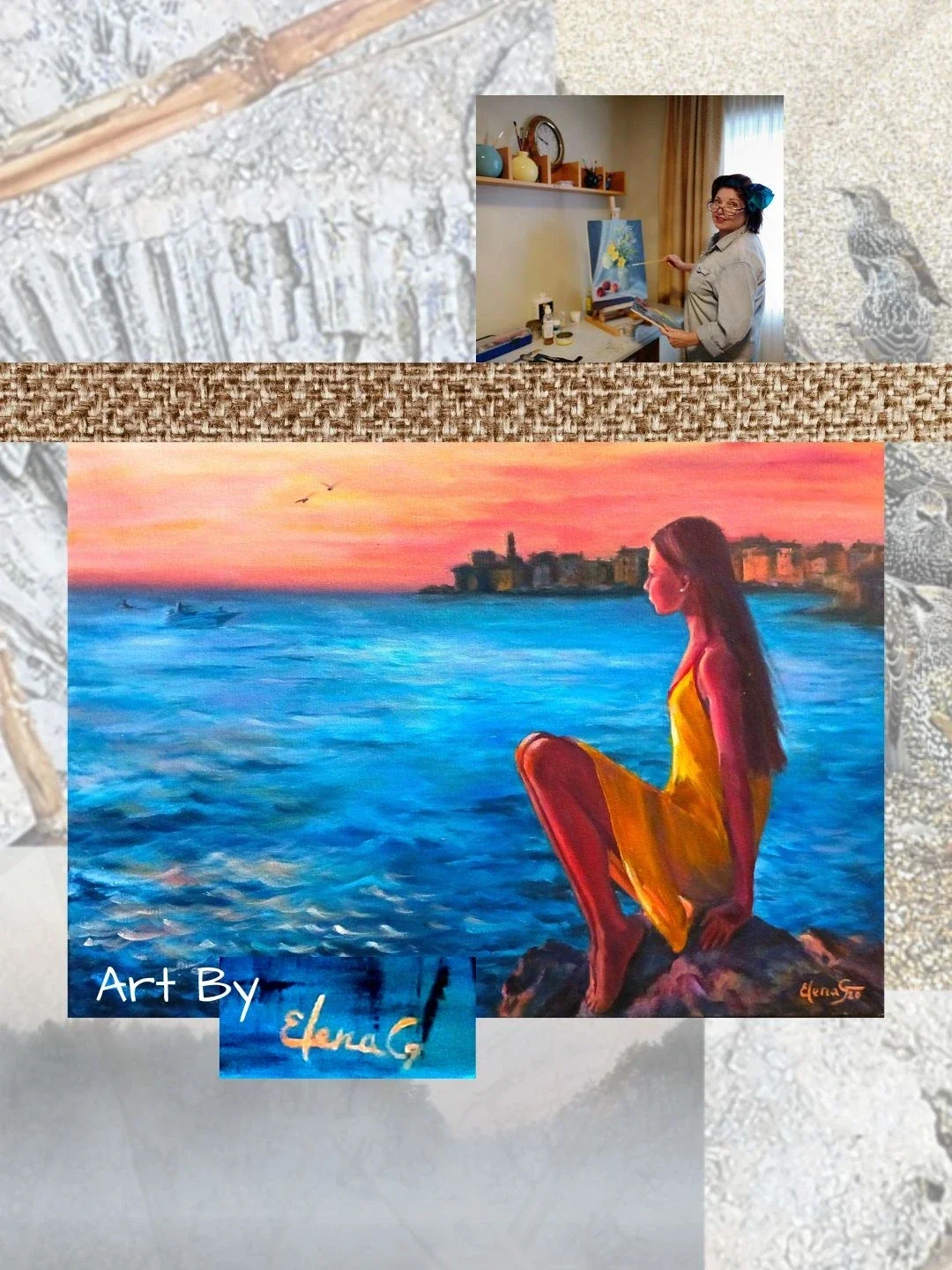
Not every painting is rooted in lived experience. Some arrive from less predictable places—dreams, for instance.
Not every painting is rooted in lived experience. Some arrive from less predictable places—dreams, for instance.
The composition "Anticipation" was born not from memory, but from a dream subtly influenced by the lyrical world of Alexander Grin. Yet the result is not an illustration—it’s a reinterpretation.
A young girl stands at the threshold of life, that delicate age where everything is still ahead. The future, in such moments, feels almost guaranteed to be beautiful—full of love, happiness, and meaningful events.
Of course, life is more complicated than that. But painting allows us to dwell, if only briefly, in that luminous expectation.
The setting—a sunset sea and a rocky shore—doesn’t dictate the story. It simply holds
Enter Charlie: The Cat Who Understands Composition.
No discussion of my works would be complete without mentioning Charlie—the family’s ginger cat and, quite possibly, a co-author of several compositions.
Cats, after all, are not just animals. They are philosophers in fur.
In paintings like Two Smart Kittens, Comforting, Art Versus Life, and Sweet Secrets, Charlie is more than a visual detail. He becomes an emotional amplifier.
There is something about a cat’s independence, its quiet mystery, its ability to be both present and distant at the same time—it adds depth to the human moment depicted.
A figure may be lost in thought, but when a cat enters the scene, the thought acquires texture. It becomes shared, observed, and subtly transformed.
Charlie doesn’t just appear in the painting.
He understands it.
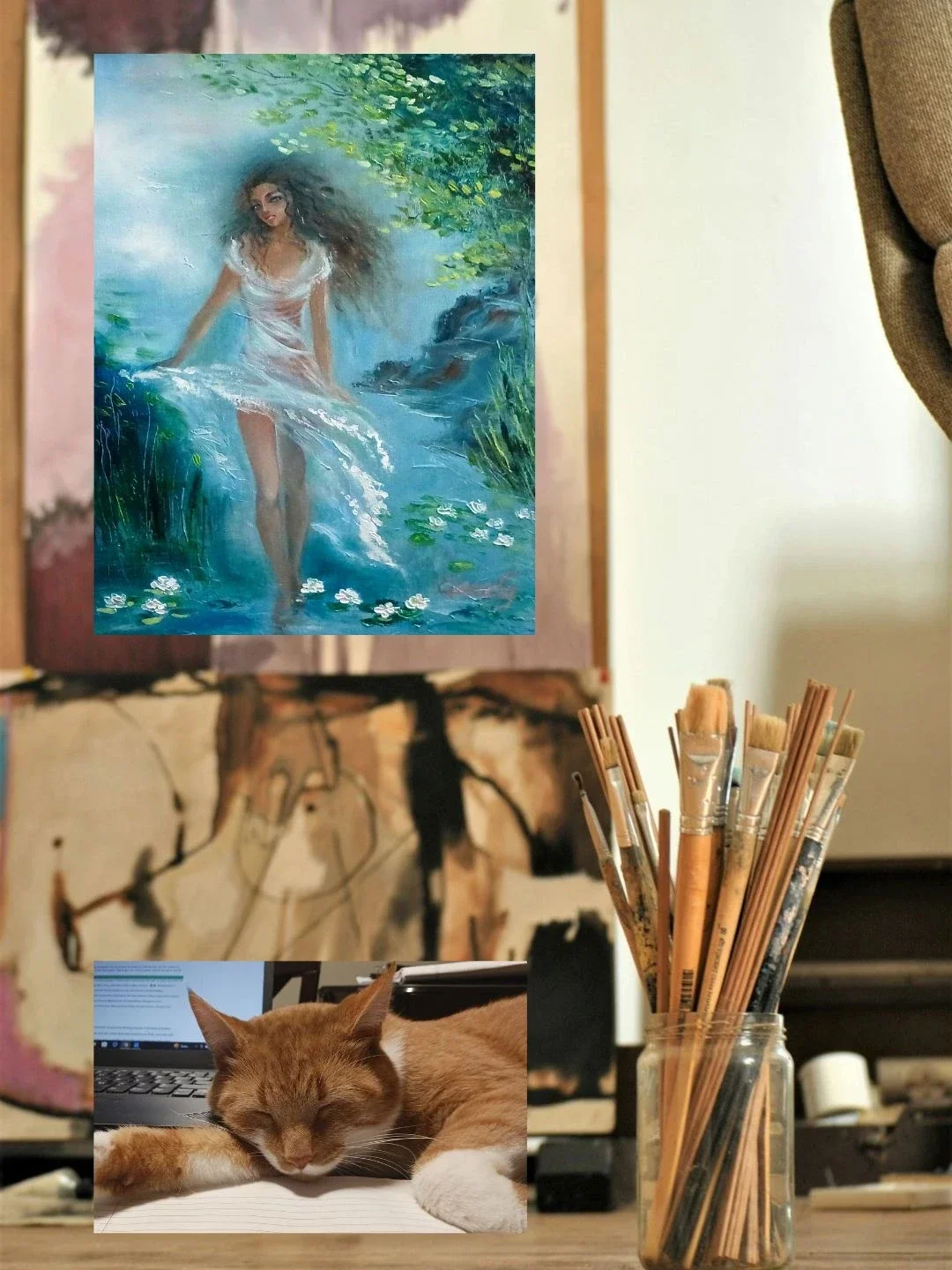
A figure may be lost in thought, but when a cat enters the scene, the thought becomes more vivid. It becomes shared, observed, and subtly transformed.
The Art of Not Over-Explaining
Perhaps what makes my approach so compelling is its refusal to overstate things. There is no heavy-handed symbolism, no insistence on interpretation.
Instead, there is trust.
Trust that the viewer will feel something.
Trust that a moment, honestly rendered, is enough.
Trust that light, gesture, and presence can speak more clearly than explanation.
And maybe that’s where the quiet humour lies, too—in the understanding that art doesn’t need to shout to be heard.
A Gentle Conclusion (and an Invitation).
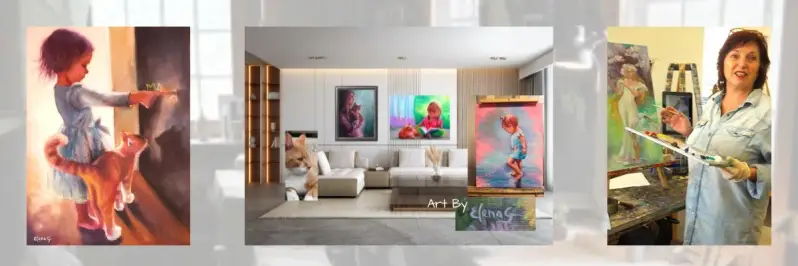
If there’s a single thread running through my figurative painting, it’s this theme: moments matter—not the grand, historical ones, but the small, almost invisible instants where emotion quietly reveals itself.
If there’s a single thread running through my figurative painting, it’s this: moments matter—not the grand, historical ones, but the small, almost invisible instants where emotion quietly reveals itself.
A child discovering a puddle.
A young woman standing in sunlight.
A cat watches, knowing more than it lets on.
These are not dramatic events. And yet, they contain entire worlds.
This, however, is the real work of the artist—not to invent meaning, but to notice it before it disappears.
Nick, co-author, ElenaG's assistant, and husband at the same time, recorded the monologue based on the artist's words.
In the next publication, we’ll shift our gaze outward—from the inner life of figures to the vast, breathing language of landscapes. Expect open пространства, changing skies, and a different kind of silence—one that speaks through horizon lines and light.
Stay tuned.
The creator of this blog is also the driving force behind its concept. After writing the text, the author used AI to make modifications. (ChatGPT).
Those who are interested in seeing more paintings from ElenaG's portrait series should follow the link: https://www.artbyelenag.com/portrait-gallery
Add comment
Comments