When a Portrait Starts Talking Back.
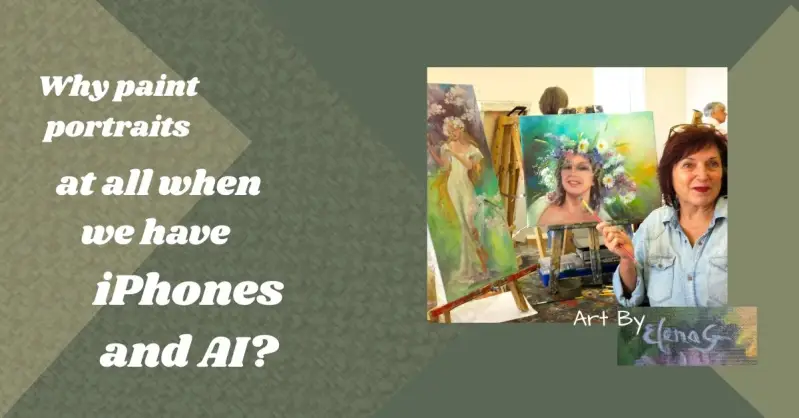
While AI produces images, a painter builds a relationship.
The Uncomfortable Question: Do We Still Need Portraits?
Let’s be honest: technology can now generate a face in seconds.
Perfect lighting, flawless skin, and no complaints from the model.
But photography has existed for over a century, and portrait painting stubbornly refuses to disappear. Why?
Because a painting doesn’t just show a face, it negotiates with it.
While AI produces images, a painter builds a relationship.
And that’s where things get… strange.
The Moment the Portrait Starts Breathing.
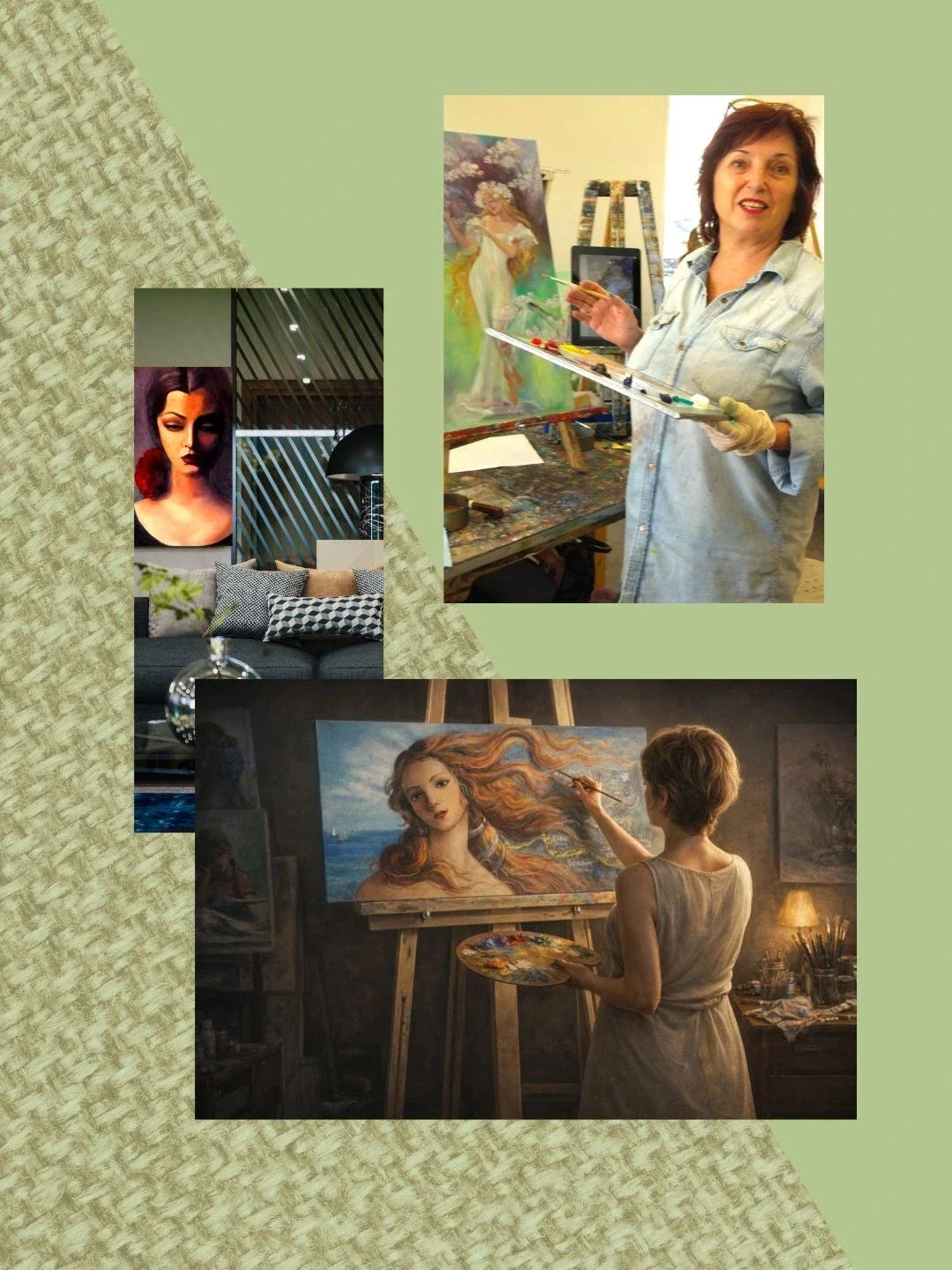
The person on the canvas begins to exist independently of me.
Between the second and third sessions—because I still cannot complete a portrait in one sitting—something shifts.
The person on the canvas begins to exist independently of me.
Not dramatically. No Hollywood special effects. Just… presence.
At first, I approach carefully. It's like talking to a slightly suspicious stranger.
- “So… how are we feeling today?”
- “Are we cooperating or being difficult?”
But then—and this is the unsettling part—the portrait answers.
Not with words, of course. That would be too simple.
It answers through expression, mood, and resistance. The result was achieved through unexpected character traits I had not planned for.
And suddenly I'm not painting anymore. I’m in a conversation.
Waiting for the Next Session Like a Coffee Date.
Since I can’t finish in one session, each return to the canvas feels like meeting someone again.
Not a model.
A companion.
You start to look forward to it. Slightly too much, perhaps.
And yes, it sounds absurd.
But when your portrait “misses you back,” things get complicated.
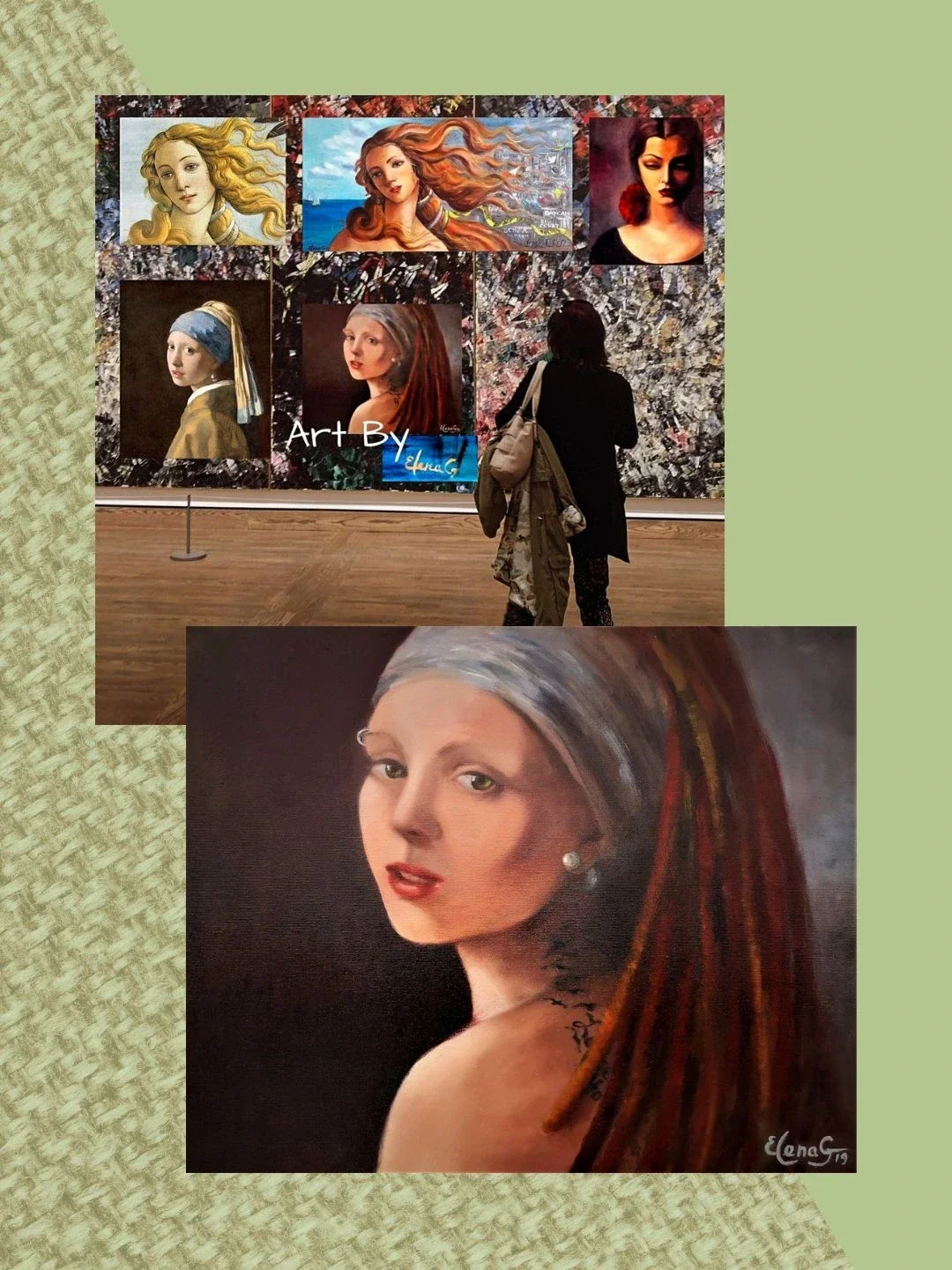
If I can talk to my own portraits… why not talk to the outstanding ones? Yes, I went there.
Conversations Across Centuries.
At some point, I got bold.
If I can talk to my own portraits… why not talk to the outstanding ones?
Yes, I went there.
I started mentally chatting with figures from classical paintings. It is not about art theory—no, it is about life.
Take the famous “Girl with the Pearl Earring,” by Johannes Vermeer.
By the way, everyone can read my husband's article about the life and creation of Vermeer at
https://www.artbyelenag.com/blogs-heart-to-heart-talks/1955051_2nd-blog.
I didn’t ask her about 17th-century Delft (although I was curious). I wondered:
- Was she elated?
- Did she want love, family, and excitement?
- Did she enjoy being mysterious — or was it just good lighting?
So naturally, I decided to bring her into the present.
A 17th-Century Girl Meets Modern Life.
My version of her looks… familiar, but updated.
Same softness. Same quiet intrigue.
But now:
- She might have tattoos
- Maybe a bit of piercing
- Possibly even dreadlocks
And yet, the essence remains unchanged.
Because across centuries, women want remarkably similar things:
to be loved, to feel alive, to matter.
While painting her, I realized something slightly embarrassing:
At her age, I wanted the same things.
So perhaps the painting wasn’t just her portrait.
It was… a conversation between two versions of youth.
Experiments, Obsessions, and Artistic Crushes.
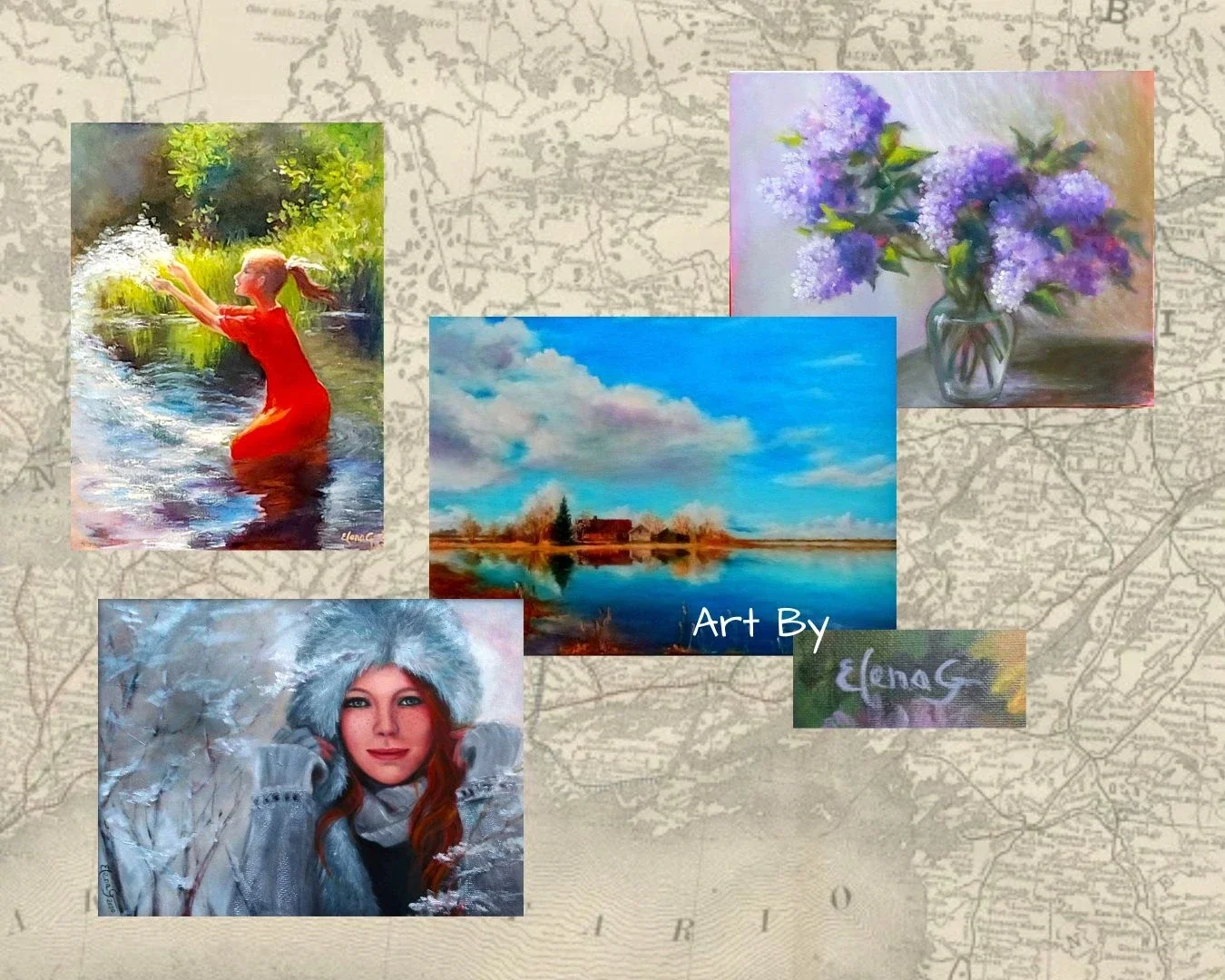
In the first years of painting, I didn’t commit to one genre. I wandered.
- Portraits
- Landscape
- Figure painting
- Still life. Each demanded new techniques, a new discipline, and new humility.
In the first years of painting, I didn’t commit to one genre. I wandered.
- Portraits
- Landscapes
- Figure painting
- Still life
Each demanded new techniques, a new discipline, and new humility.
I then discovered certain artists and became completely captivated by their work.
When Technique Becomes Magic.
One artist taught me the power of bold colours and expressive brushwork. The kind of painting where chaos somehow becomes harmony.
It was Nikolai Fechin.
We can meet Fechin's artwork at https://www.taosartmuseum.org/
My husband has written an article about Fechin's artworks and his technique at
https://www.artbyelenag.com/blogs-heart-to-heart-talks/2009853_blog-5-new-redaction
Another—from an entirely different era—pulled me into a world of elegance, symbolism, and rhythm.
Here we are talking about Alphonse Mucha.
You can meet Alphons Mucha's artwork at https://mucha.eu/en
After seeing a series about his “Four Seasons," I had a thought:
What if I gave those flat, graphic figures volume, presence, and breath?
Reimagining the Seasons.
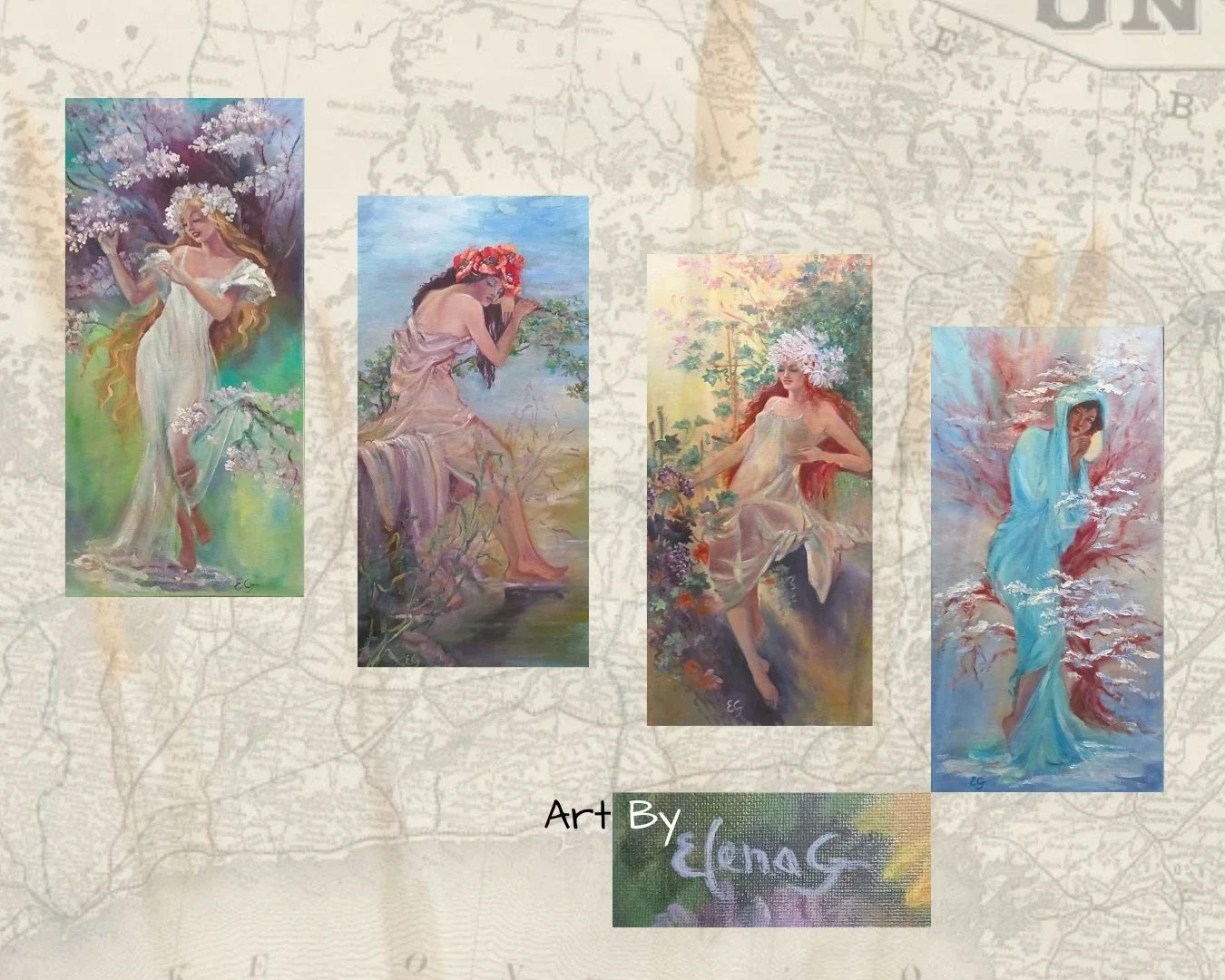
This time, I wasn’t just copying. I was translating. This gives each figure not just shape but atmosphere.
I created my own interpretations:
- Winter with a colder, sharper light
- Spring — softer, awakening
- Summer — bold and radiant
- Autumn — warm, reflective
This time, I wasn’t just copying.
I was translating.
This gives each figure not just shape but atmosphere.
My friends said it worked.
(Artists always pretend they don’t care what others think. We absolutely do.)
And again, I have to mention that my husband has written an article about Alphons Mucha's artworks and his technique here: https://www.artbyelenag.com/blogs-heart-to-heart-talks/2723632_blog-24
A Difficult Conversation with a Genius.
The conversation was challenging. Perhaps it was the centuries between us. Or the difference in worldview.
Either way, I made a decision. A bold one.
Then came a more… intimidating dialogue.
A reinterpretation of a Renaissance masterpiece.
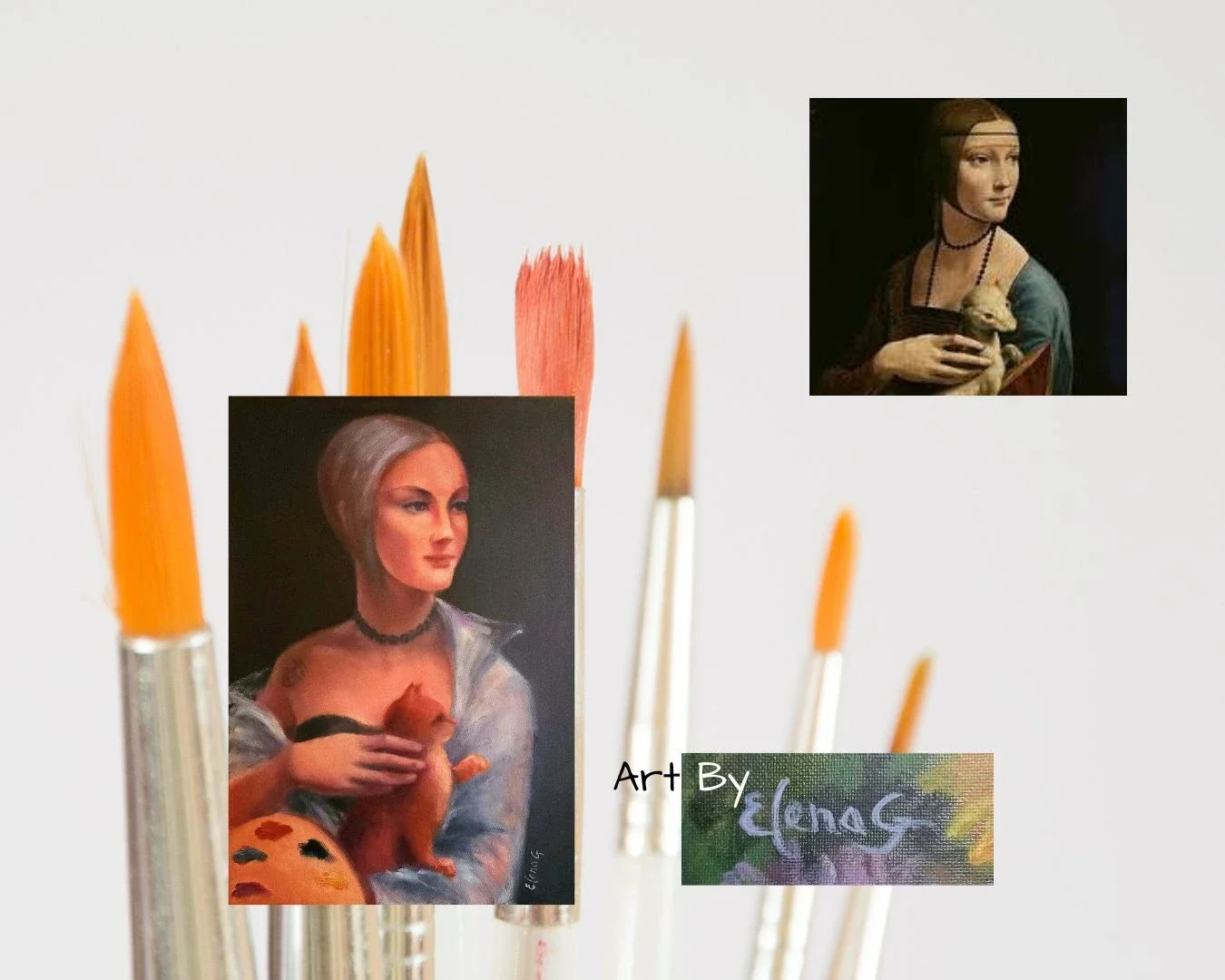
Here we are talking about the famous painting by Leonardo da Vinci, " The Lady with an Ermine."
Know more about the famous painting by Leonardo da Vinci at https://en.wikipedia.org/wiki/Lady_with_an_Ermine.
The conversation was challenging.
Perhaps it was the centuries between us. Or is it the difference in worldview?
Either way, I made a decision.
A bold one.
Replacing Tradition with Something… Furry.
In my version:
- The sacred ermine became… a cat
Yes. A cat.
Before you judge me, we are a household of devoted cat people. The result felt emotionally accurate.
I also added:
- A palette of paints in the composition
Why?
Because I cannot imagine a modern woman being passive in her own life.
She creates. She acts. She participates.
Even inside a classical composition.
What I’ve Learned from Talking to Paintings.
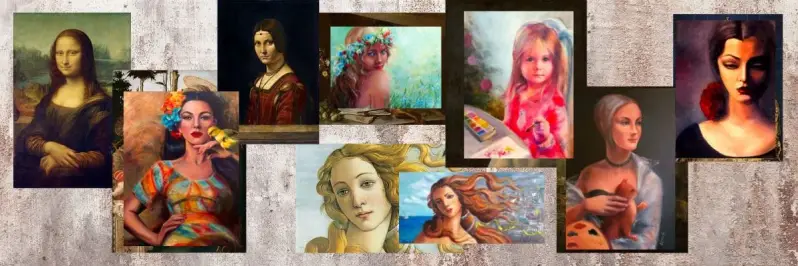
Painting is not about control. It’s about listening. I am listening to a portrait that refuses to stay silent.
After all these years, here’s what surprises me most:
Painting is not about control.
It’s about listening.
Listening to:
- The subject
- The past
- Yourself (which is often the most difficult voice to hear)
And occasionally… listening to a portrait that refuses to stay silent.
What Comes Next?
You might think this moment is where I neatly conclude with a wise artistic statement.
Tempting.
But no.
Because portraits are just one chapter.
There are still landscapes that whisper, still lifes that argue, and figures that strongly refuse to behave.
And I suspect…
Some of them are already waiting to talk.
ElenaG.
To those who are interested in my portrait artwork, I invite you to follow "https://www.artbyelenag.com/portrait-gallery.
The creator of this blog is also the driving force behind its concept. After writing the text, the author used AI to make modifications. (ChatGPT)
Add comment
Comments