Still Life Painting: When Objects Begin to Speak.
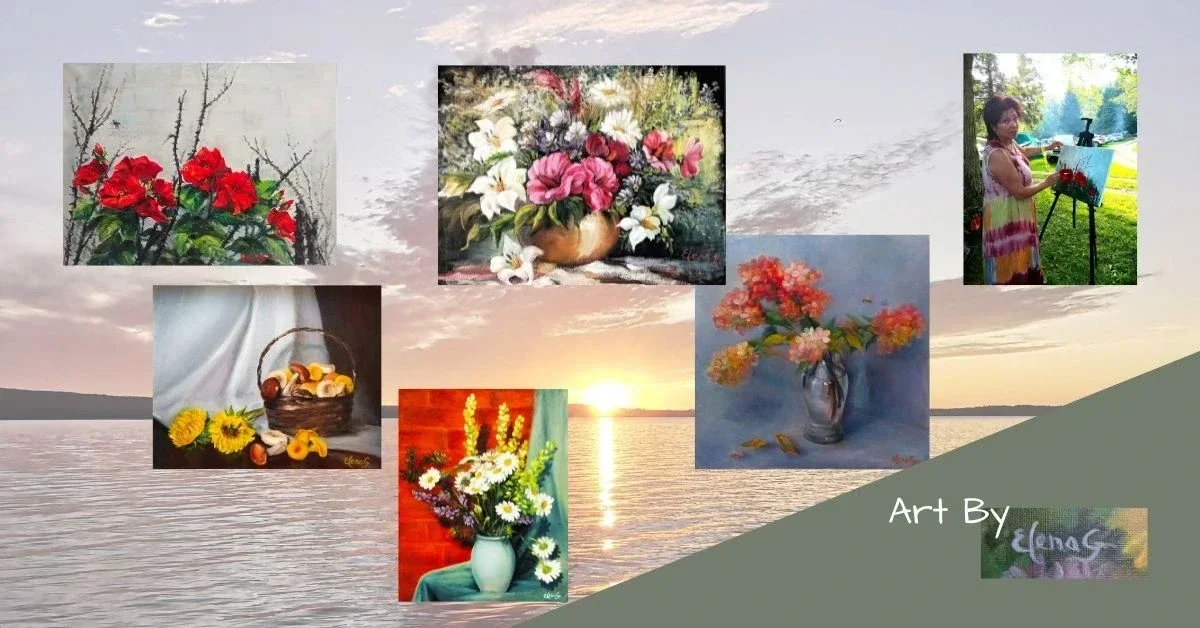
Still life is often perceived as one of the quietest genres in art. Yet for many artists, still life becomes one of the most engaging and intellectually rewarding forms of painting.
Still life is often perceived as one of the quietest genres in art. Flowers, fruit, books, vessels, and everyday objects appear motionless on the canvas, patiently waiting for the viewer's attention. Yet for many artists, still life becomes one of the most engaging and intellectually rewarding forms of painting.
What begins as a simple arrangement of objects frequently develops into a creative dialogue between the artist and the canvas. The longer one works within the genre, the more surprising and profound the experience becomes.
Why Artists Return to Still Life.
Many artists approach still life out of curiosity. They select objects, arrange a composition, determine the light source, and establish a clear visual plan. At first, everything appears to be under complete control.
Then something unexpected happens.
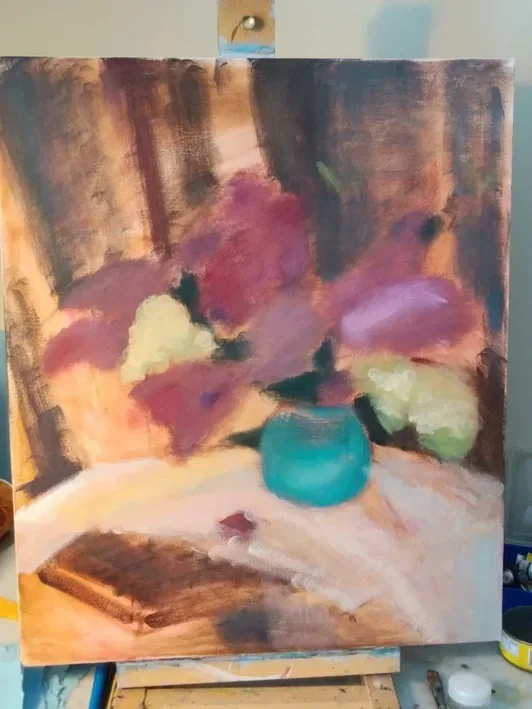
The beginning of the creation of the original still life titled "Fragrant May."
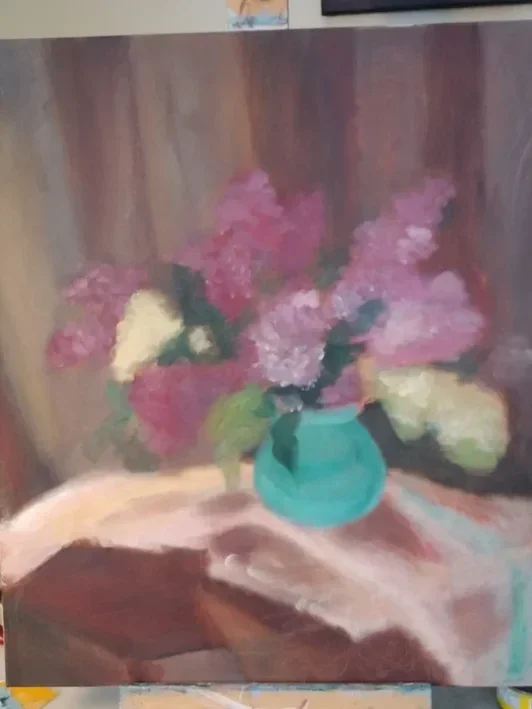
The next stage of the creation of the original still life titled "Fragrant May."
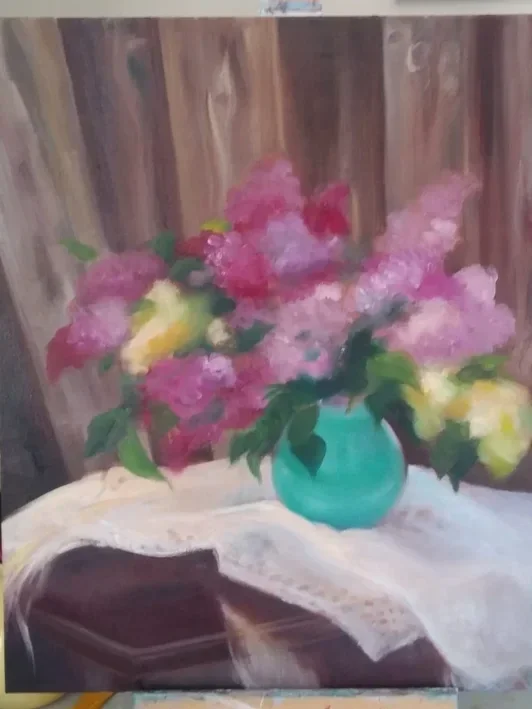
The following stage of creating the original still life is titled "Fragrant May."
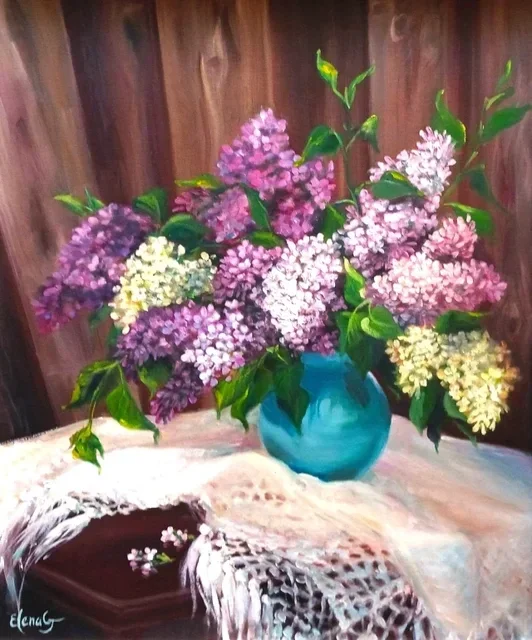
The final result is the original oil painting "Fragrant May" by ElenaG.
Every experienced painter knows the moment when a painting begins to develop a life of its own. Initially, the canvas seems almost stubborn, revealing flaws in its colour relationships, composition, and lighting. Each brushstroke becomes a lesson in what is not yet working.
Eventually, however, the relationship changes. The painting begins to respond. A dialogue emerges between artist and artwork, and the original concept starts to evolve into something entirely new.
The process resembles poetry. A poet may begin with a particular rhythm or rhyme scheme, only to discover that the poem itself is leading the way. In much the same manner, a still life painting can guide the artist toward unexpected ideas, moods, and visual discoveries that were never part of the initial plan.
Flowers as a Source of Inspiration
For Elena Gaevskaya, flowers have always occupied a special place in her artistic practice. She particularly loves simple wildflowers and seasonal blooms that many people overlook.
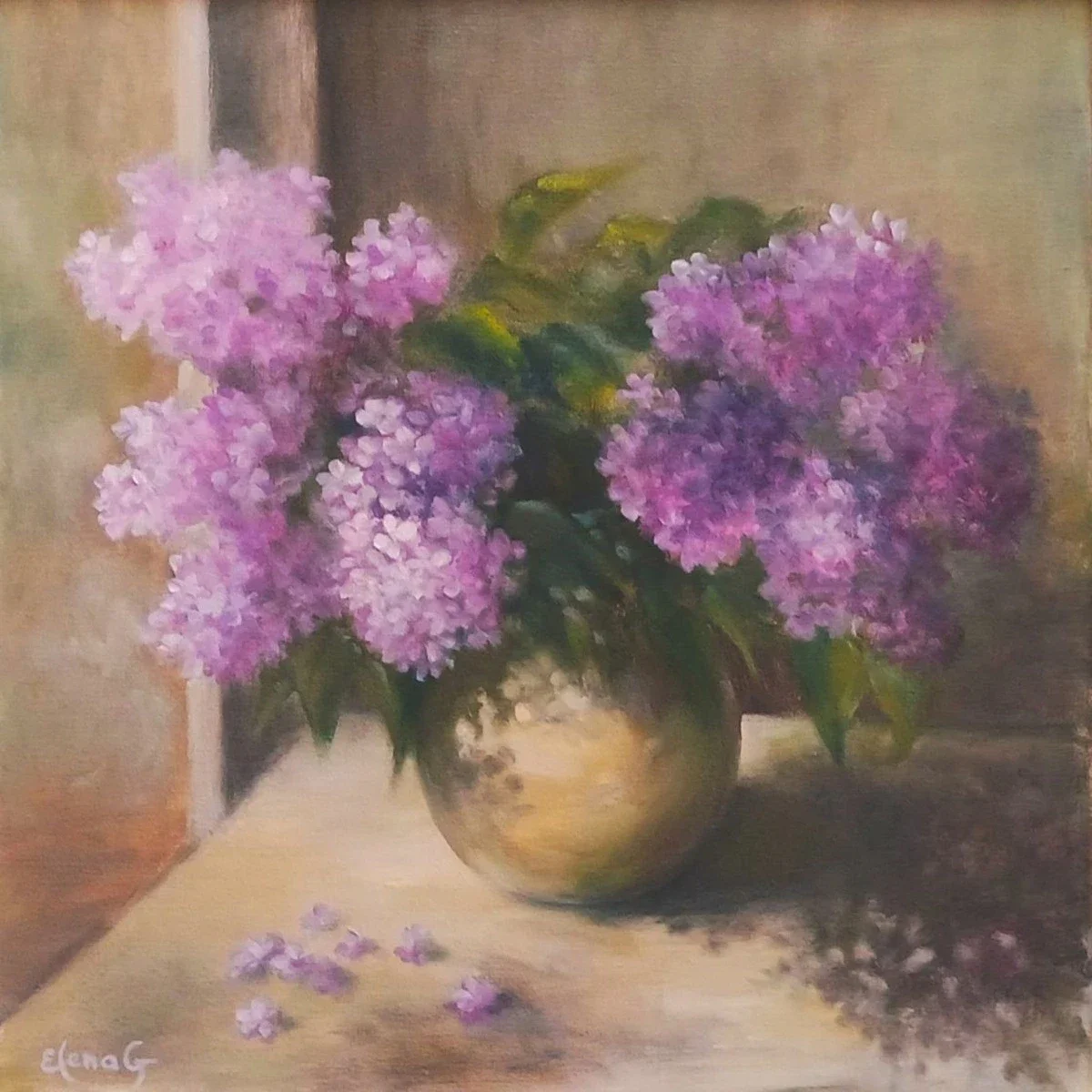
Original oil painting by ElenaG. ''Just a May Day."
Each year, at the beginning of June, she paints lilacs. Over the years, many of her lilac still lifes have found homes in private collections, becoming some of her most cherished works.
Flowers uniquely affect her. Occasionally, a large bouquet becomes the centre of a composition. At other times, only a few tiny blossoms are enough to inspire an entire painting.
Elena often says that a small-format painting, when supported by the right light and colour relationships, can have the emotional power of a symphony. Some works resonate in a bright major key, while others unfold with the quiet melancholy of a minor melody.
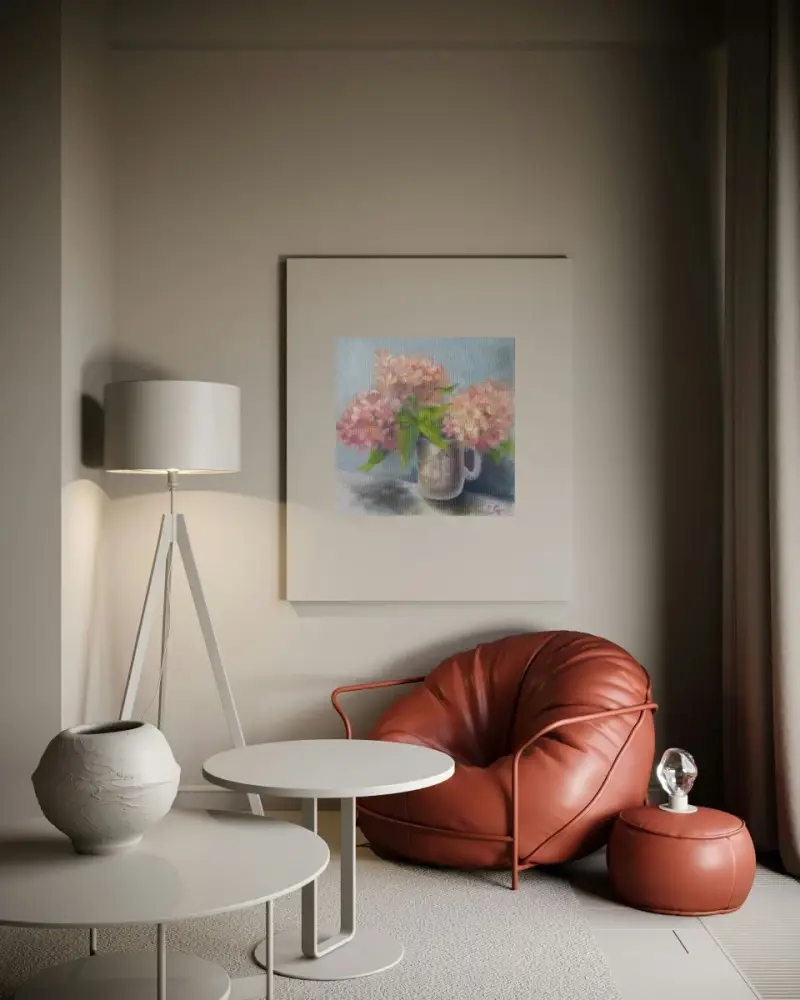
Original oil painting "Tender Breath" by ElenaG in the interior.
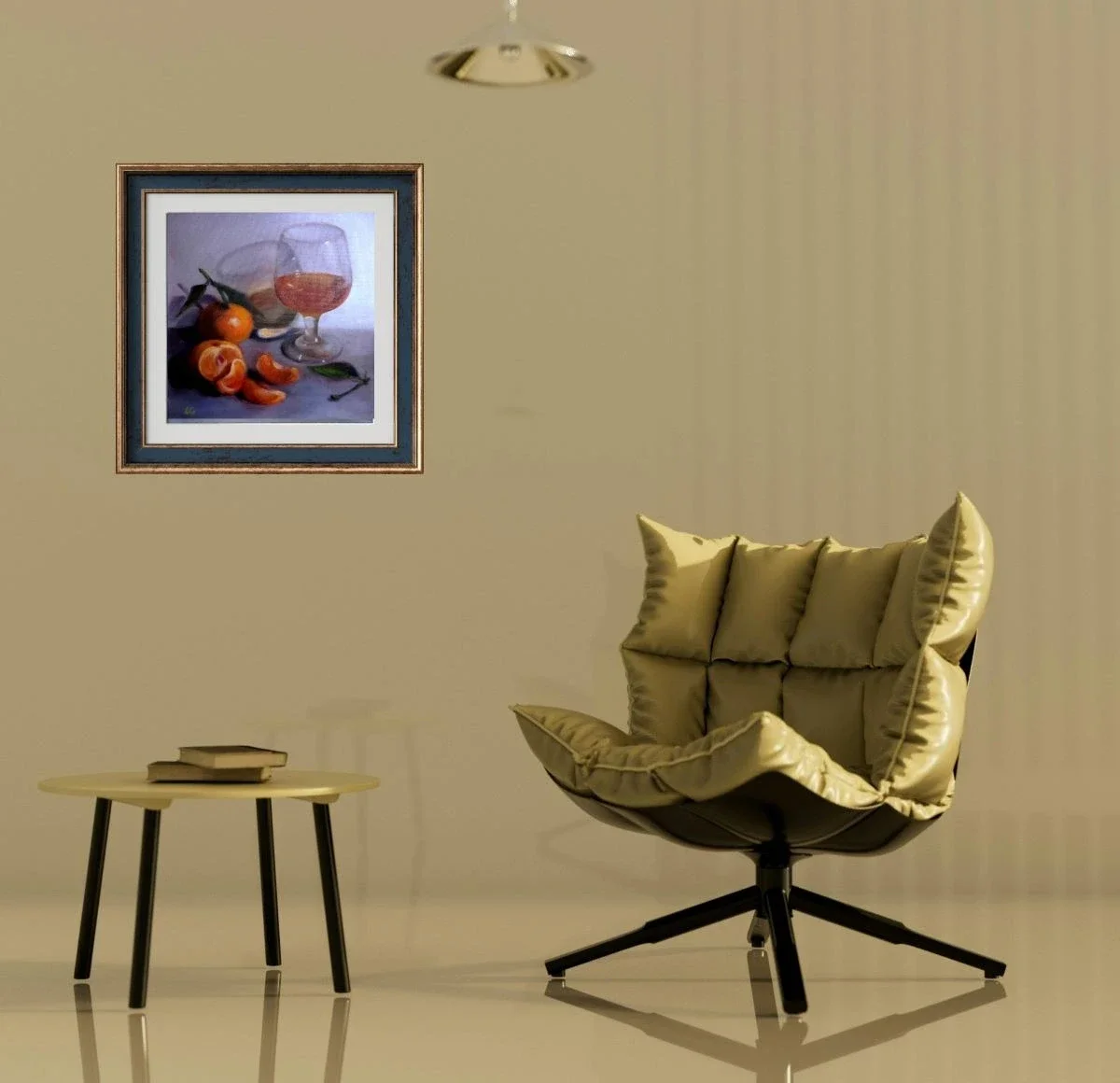
A small format of still life oil painting by ElenaG titled "Golden Pleasure" in the interior.
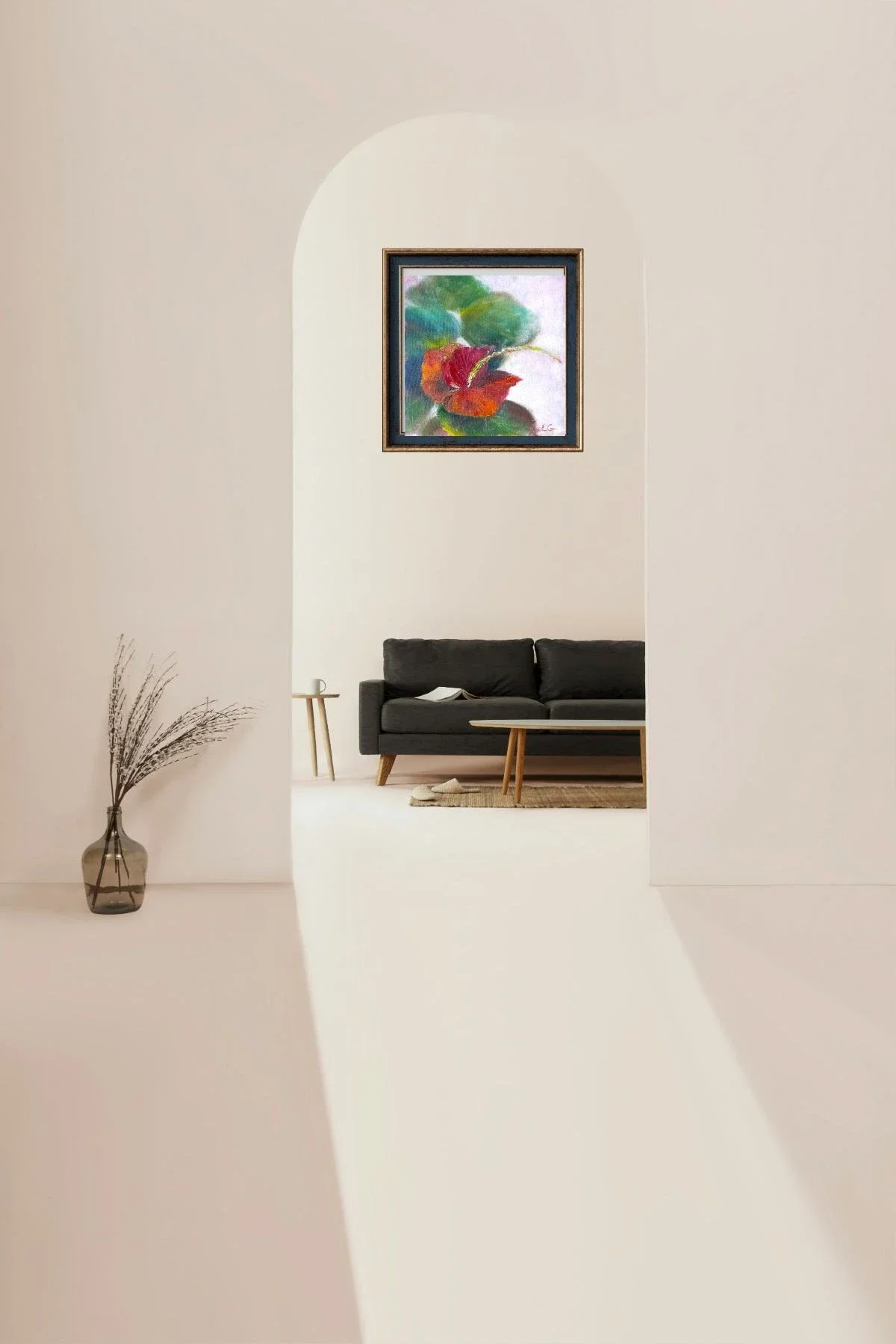
"Caribbean Spring" is the title of a small still-life painting by ElenaG in the interior.
Her early artistic development was closely connected to floral still life. She carefully selected unusual combinations of flowers, spending hours adjusting arrangements and experimenting with different lighting conditions. A bouquet might be observed under light from the left, from the right, or from above before she photographed it extensively.
Only after this period of observation and preparation would the painting process truly begin.
Observing the Artist at Work.
From my perspective, watching this endless cycle of seasonal discoveries transform into new paintings remains a constant source of admiration and surprise.
Being married to an artist also gives me a certain privilege.
Elena possesses a rare ability to appreciate the beauty of the smallest things. A single lily of the valley, a wild violet, or an unnoticed flower growing near a roadside can capture her imagination completely. Many of these encounters eventually find their way onto the canvas.
Members of our local artists' club often witness the same remarkable transformation. Elena may place a modest bouquet of wildflowers on a table, seemingly insignificant in appearance. An hour later, those simple flowers have become a fully realized still life, rich with atmosphere, structure, and emotion.
Unlike many painters, she has never been interested in copying others' compositions, even those of the great Dutch masters. For her, the essential challenge is to create an original arrangement and to work directly with living flowers that carry the colours, textures, and fragrances of nature.
She once admitted that the scent of flowers is an important part of her creative process. The fragrance itself becomes intertwined with her choices of colour, light, and composition.
Perhaps that is why her paintings often preserve a sense of freshness and living presence.
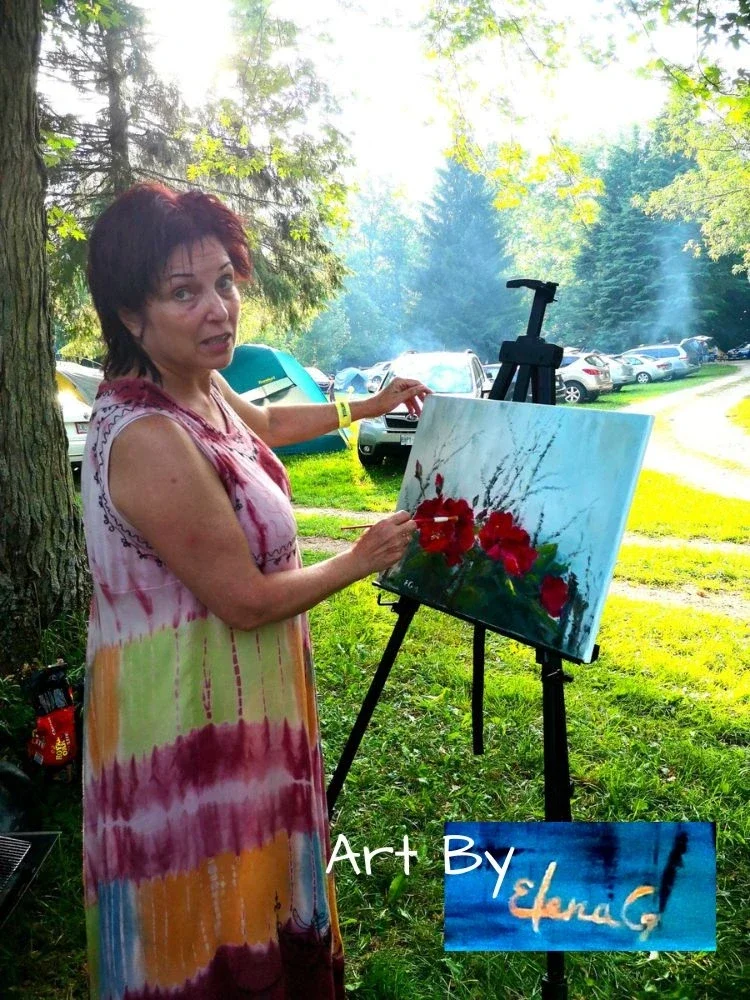
Artist ElenaG at the plein air event.
When Nature Becomes a Collaborator
The creative process occasionally produces unexpected stories.
During a May plein-air painting session at Golden Lake, we were working outdoors as guests of a friend. A dense cloud of tiny insects filled the evening air. There were so many that they settled directly onto the wet paint, covering portions of the canvas.
The sun was setting quickly, and there was little time to stop. Since oil paint dries slowly, removing the insects without damaging the surface proved nearly impossible.
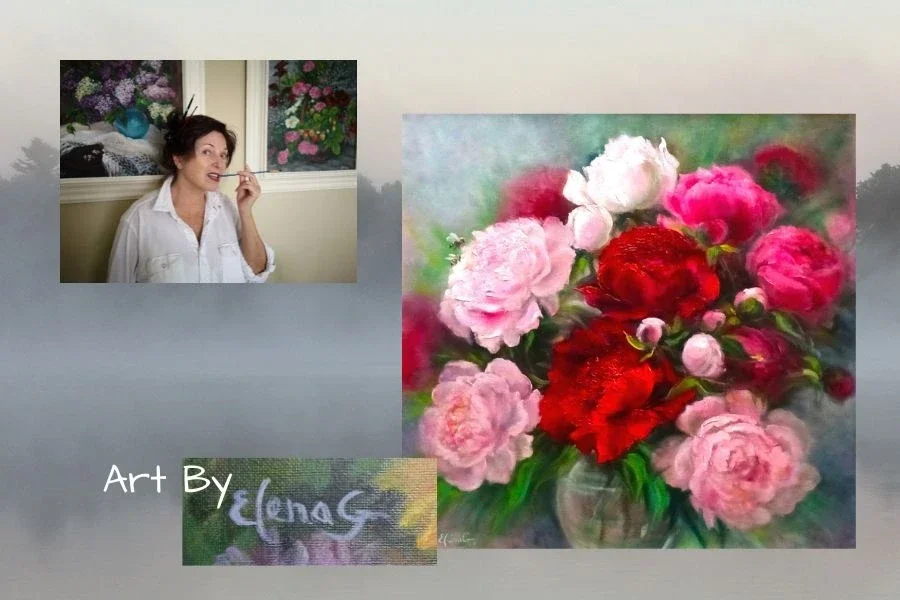
The portrait of artist ElenaG with her logo and a still-life oil painting, which was recently sold at the McLaren Art Centre.
As a result, the finished painting developed an unusual texture that no one had ever intentionally planned.
Later, during an art exhibition, several experienced viewers commented on what they believed was a fascinating and sophisticated technique. They studied the surface with considerable interest, unaware that nature itself had created part of the texture.
It was a reminder that artists are not always the sole authors of their work. Sometimes chance, weather, and circumstance become collaborators.
The Enduring Appeal of Still Life
Still life remains one of the most timeless genres in art because it encourages us to slow down and pay attention.
The genre reveals beauty in ordinary objects and transforms everyday experiences into visual poetry. Whether depicting a lavish bouquet, a handful of wildflowers, or a simple arrangement of seasonal objects, still life invites viewers to discover meaning in the familiar.
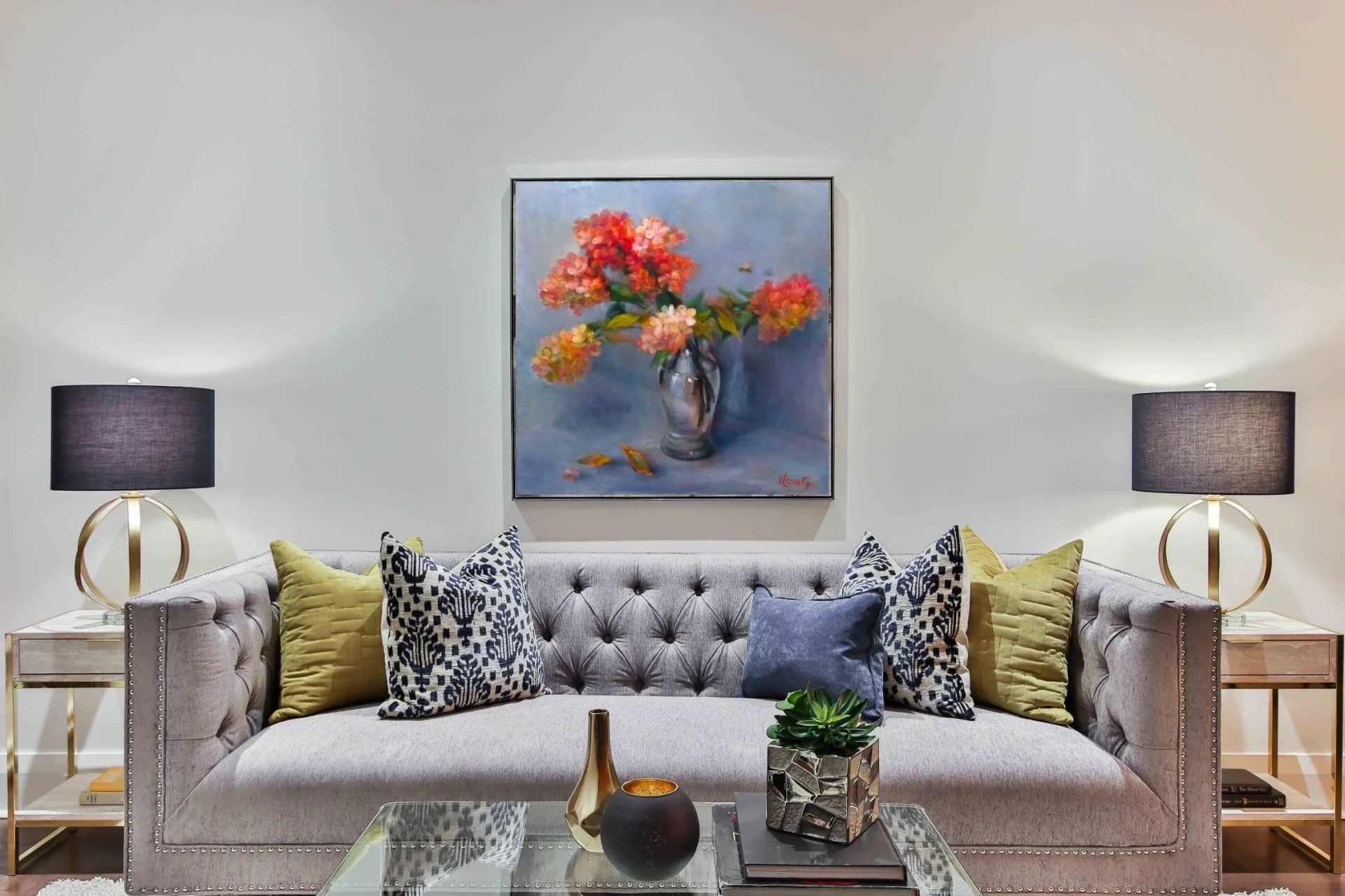
Original oil painting by ElenaG titled "Bee...Happy. September." in the interior.
For collectors, these paintings offer more than decoration. They preserve moments of observation, emotion, and contemplation that continue to resonate long after the paint has dried.
Explore the Gallery
We invite you to explore our collection of still life paintings and discover how ordinary flowers and objects can become extraordinary works of art.
https://www.artbyelenag.com/still-life-gallery
Through colour, light, composition, and imagination, each painting tells its own story. We look forward to sharing new works, discoveries, and new conversations with fellow art lovers and collectors in the future.
Nik. Art lover, blogger, and "fibber."
I conceived the blog article concept and edited it, and I utilized ChatGPT to compose the text.
Add comment
Comments