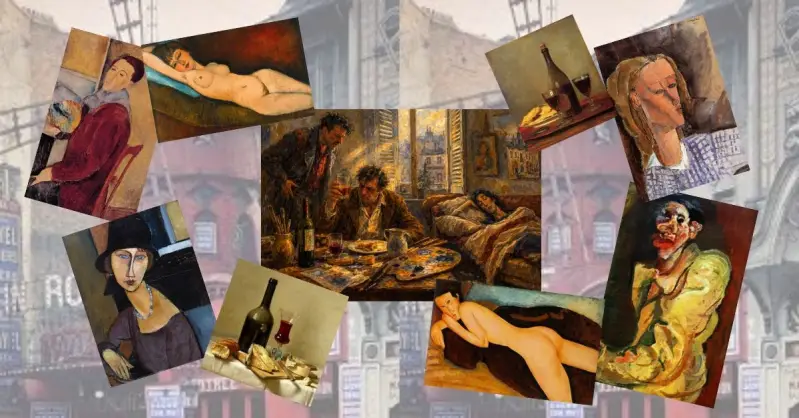
It was the kind of Paris morning that feels slightly offended by the night before.
A Morning With Modigliani, Utrillo, and Soutine: Wine, the Artwork, and the Legacy.
The Artist’s History, Career, and Cultural Impact: A Morning Conversation About Amedeo Modigliani.
It was the kind of Paris morning that feels slightly offended by the night before.
Pale light crept through the shutters, illuminating three painters who looked as though they had collectively argued with a barrel of wine and lost.
At the centre of this domestic disaster was Maurice Utrillo, who was squinting into a glass that contained what he claimed was “breakfast.”
Standing over him was Chaim Soutine, whose patience had clearly expired several hours earlier.
And on a narrow sofa, half-awake and dramatically tangled in a blanket, lay Amedeo Modigliani—the man who had somehow become the subject of the argument.
“You Always Separate the Man From the Painter”
“B-Bordeaux,” muttered Modigliani, “is… is a very respectable collaborator.”
Soutine slammed a sketchbook on the table.
“Maurice,” he said, pointing a finger that had once held a brush but now held accusation, “you always detach Modigliani from the creative process. It's as though the paintings materialize while he's asleep beneath a café table!
Utrillo shrugged, which was impressive considering his shoulders appeared to be made of wet sand.
“My dear Soutine,” he sighed, “wine is the best stimulant for creativity.”
Soutine blinked.
“That is not a theory,” he said slowly. “That is an excuse.”
“Excuse?” Utrillo said, offended. “It is a method. Many artists use charcoal. Some use oil. Modigliani uses Bordeaux.”
At this point, the blanket on the sofa moved, and a voice emerged.
“B-Bordeaux,” muttered Modigliani, “is… is a very respectable collaborator.”
The Real Story Behind Modigliani’s Art
Modigliani's artistic career was far from accidental, despite the jokes that followed him through Montmartre and Montparnasse.
Born in Livorno, Italy, in 1884, he arrived in Paris in 1906, when the city was the epicentre of modern art. The cafés buzzed with new ideas, and artists debated everything—from Cubism to the proper way to avoid paying for dinner.
Modigliani quickly developed a distinctive style. His portraits and nudes were unmistakable: elongated faces, elegant necks, almond-shaped eyes, and a quiet psychological intensity that made viewers feel observed as much as they were observing.
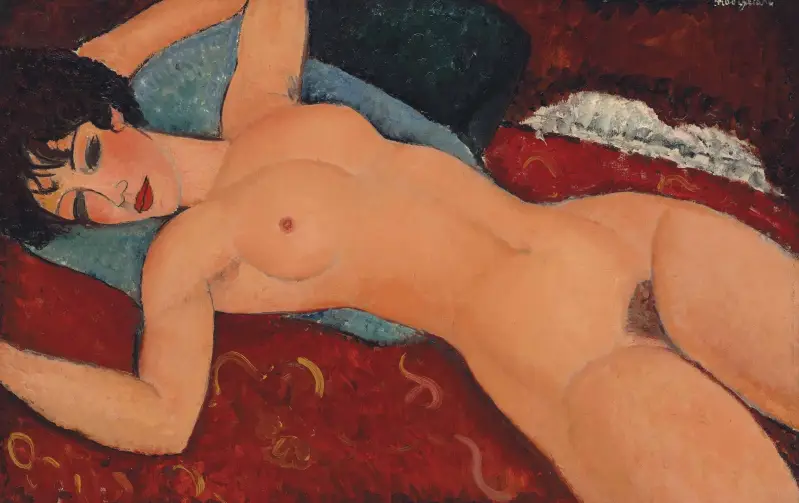
“Those faces,” Soutine grumbled that morning, “they look simple.” But they are not simple.”
Utrillo nodded solemnly.
“Exactly. If they were simple, we could all paint them.”
Modigliani lifted his head.
“I-I would prefer if you did not.”
“Those faces,” Soutine grumbled that morning, “they look simple. But they are not simple.”
Utrillo nodded solemnly.
“Exactly. If they were simple, we could all paint them.”

Modigliani lifted his head.
“I-I would prefer if you did not.”
Passion, Infatuation, and the Best Works
Contrary to the legend that his greatest works were fueled purely by alcohol, many of Modigliani’s most celebrated paintings emerged during periods of intense emotional attachment.
His portraits often captured lovers, friends, and fellow artists with an intimacy that felt both modern and timeless.
“When Modigliani falls in love,” Utrillo explained dramatically, “he paints like a violin.”
“You mean virtuoso?” Soutine asked.
“No,” Utrillo said. “I mean fragile and expensive.”
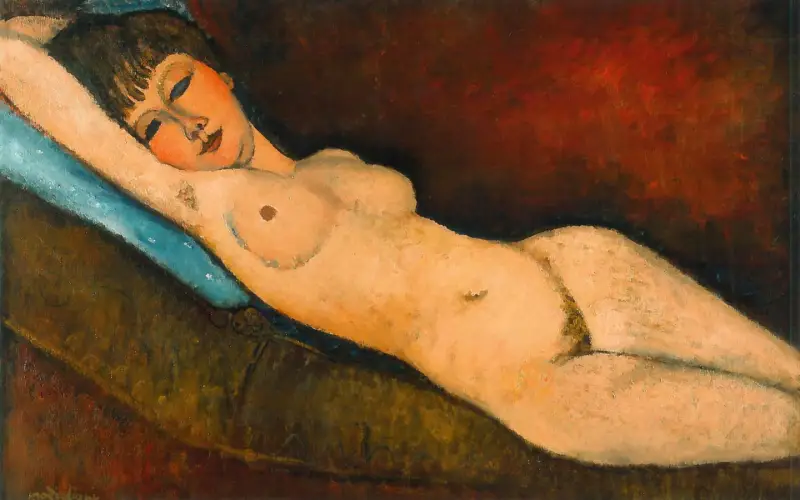
Critics of the time were fascinated—and sometimes scandalized—by Modigliani’s nudes. Their fluid lines and sensual presence electrified the public. Some viewers admired their elegance; others suspected the artist’s lifestyle might have had something to do with their uninhibited energy, suggesting that Modigliani's bohemian lifestyle and personal struggles influenced the emotional depth and boldness of his work.
Soutine leaned forward.
“You see?” he said. “They think the wine made the paintings.”
Modigliani rubbed his forehead.
“No,” he murmured. “The wine made the critics.”
Cultural Impact and the Verdict of History.
During his lifetime, Modigliani struggled financially and critically. His unconventional style did not always find immediate appreciation, and his health remained fragile, which contributed to his struggles in gaining recognition during his lifetime.
Yet time has a way of correcting artistic misunderstandings.
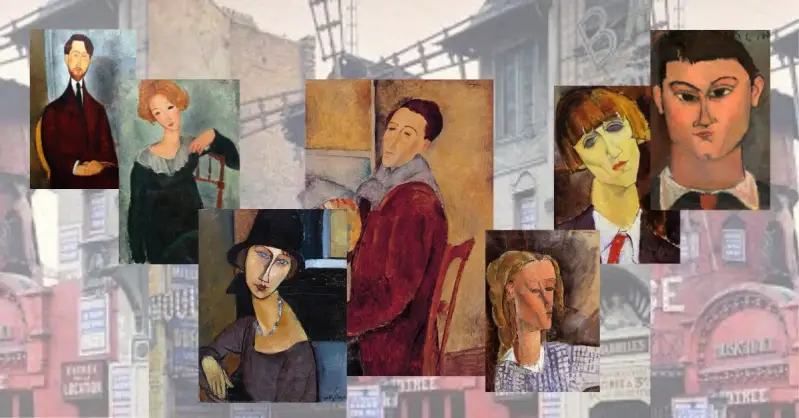
Today, Modigliani is widely regarded as one of the most distinctive painters of the early twentieth century. His portraits are instantly recognizable, bridging influences from Renaissance portraiture, African sculpture, and modernist experimentation.
Art historians across the world rarely argue about his significance anymore.
They may debate his influences.
They may debate his technique.
But they do not debate his importance.

Back in the apartment, Soutine finally sighed.
“Fine,” he said. “Maybe the wine did not paint the portraits.”
Utrillo raised his glass triumphantly.
“But it helped us discuss them.”
Modigliani sat up slowly, blinking at the sunlight.
“My friends,” he said, “the truth is simple.”
The room waited.
“A painter needs inspiration.”
“Yes?” said Soutine.
“And sometimes,” Modigliani added carefully, “inspiration arrives… in a bottle.”
Soutine groaned.
Utrillo applauded.
And Paris, outside the window, prepared for another perfectly unreasonable day in the history of modern art.
NIK.
I conceived the blog article concept and edited it, and I utilized ChatGPT to compose the text.
Add comment
Comments