Anna exclaimed, “I love it,” leaning forward. “But the price is higher than expected.”
When the Price Tag Speaks: What Thoughtful Art Buyers Really Hear.
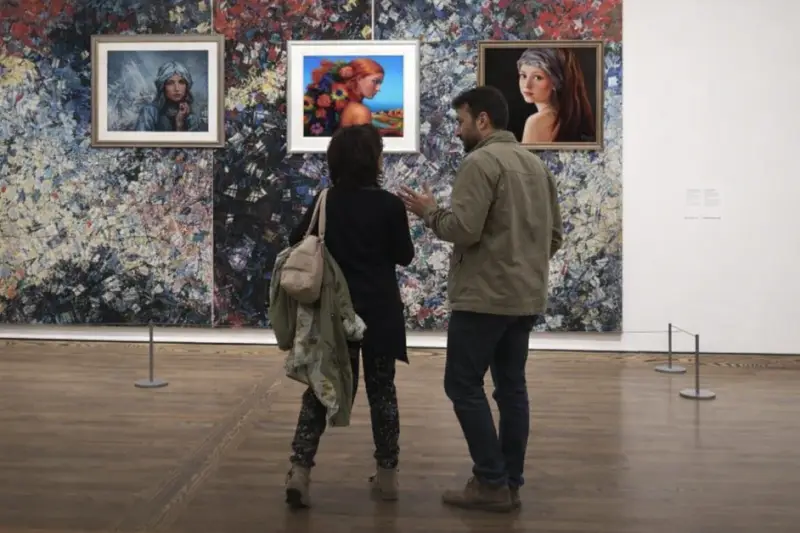
Low talk, the sound of shoes on hardwood flooring, and the calm intensity of a painting filled the space.
Two collectors spoke about three paintings.
Anna exclaimed, “I love it,” leaning forward. “But the price is higher than expected.”
Michael grinned. “Is it? Is it worth more than you're willing to admit?
Anna lifted an eye. “You think price affects emotion?”
“It definitely does,” he said. „Not just emotionally. Rationally. Artwork's wording includes price.”
Their debate illustrates one of the most misunderstood elements of purchasing original art: how painting prices affect perception, particularly for serious purchasers.
As artists and galleries, we hesitate to discuss price.
Prices are never just numbers for collectors. It conveys purpose, confidence, posture, and longevity.
Join their discussion.
1. Price as a Signal of Confidence.
Anna checked the label again.
“Sometimes I wonder,” she continued, “whether higher pricing is just ambition.”
“Or clarity,” Michael said. When an artist rates regularly and boldly, I know they know their market value.”
Thoughtful art purchasers don't think high prices are arrogant. They want coherence:
Does price matching work for works of comparable size and complexity?
Has it developed gradually?
Reflect on exhibits, prizes, or professional development?
Art buyers expect price increases in New York and London. A painting that remains at a low price for years may be more concerning than one that increases in value.
Artist advice: Structured pricing promotes trust. Unexpected leaps or inconsistencies cause hesitancy.
2. The Psychology of Perceived Value.
Anna crossed her arms. But what if I adore the painting? Should pricing matter?
Michael nodded. It matters since you're purchasing more than canvas hues. You purchase commitment.”
Thoughtful shoppers consider:
Emotional resonance
Artistic integrity
Craftsmanship
Market position
Long-term collectability
Prices affect all of them.
If an artwork is too cheap, serious collectors may discreetly dispute it:
Is the artist assured?
Why is the work undervalued?
Will this rise in value?
Buyers feel instability if an artwork is overpriced without market support.
Price must equal story, quality, and trajectory.
3. Price and Emotional Commitment.
Anna smiled gently. I pondered my first significant purchase for weeks. The cost worried me.”
“And?” Michael inquired.
This made me think carefully. After deciding, I treasured it more.”
This fact is strong.
Significant purchases frequently need significant choices.
Good purchasers use price as a boundary, not an impediment. Crossing turns intrigue into commitment. Relationships deepen with financial and emotional involvement.
Collectors often note that their most expensive paintings become the focal points of their homes.
Their most talked-about articles
The art they resonate with
Price adds meaning.
4. The Danger of Underpricing Art.
Michael turned to another wall.
“I’ve seen talented artists undervalue their work for years,” he remarked. “They rarely benefit.”
Underpricing may seem advantageous for budding artists, but it might cause long-term issues.
It lowers the artist's commercial standing.
It draws bargain hunters.
Future price hikes are harder.
Serious collectors want security. They want to think the artist is growing carefully.
Even Sotheby's and Christie's show how price history affects perception. References come from auction outcomes. Be consistent to gain confidence.
Price history offers a tale, even if not all artists auction.
5. The Thoughtful Buyer’s Internal Dialogue.
Anna reexamined the artwork. “When I hesitate at the price, what am I asking?”
Michael kindly said, "You're asking if the artist's vision, skill, and trajectory justify such a commitment."
Thoughtful art buyers consider:
Does this artist speak clearly?
Is the work cohesive?
Are exhibits and professional steps visible?
Does the pricing match similar artists?
Trust is assessed, not numbers.
Trust the artist.
Trust the gallery.
Trust their instincts.
6. How Artists Can Approach Pricing Strategically.
For artists navigating how to price paintings, clarity is essential.
Here are practical principles:
1. Create a structured pricing matrix.
Size, medium complexity, and time investment should correlate logically.
2. Adjust gradually.
Increase prices after exhibitions, sales milestones, or critical recognition—not randomly.
3. Communicate confidently.
Avoid apologizing for the price. Present it as a natural reflection of growth.
4. Understand your market segment.
Pricing must align with your audience’s expectations and purchasing power.
5. Think long-term.
Your pricing today shapes your positioning tomorrow.
7. The Conversation’s Conclusion.
Anna looked at the gallerist after a while.
“I’ll take it,” she whispered.
Later, she told Michael, “It wasn’t just the painting. Clarity was behind it. The cost was fair. Feeling considered.”
This is the core problem.
Price doesn't deter conscientious customers. Information.
Communicates:
Profession maturity
Artist confidence
Market position
Respect the work
Pricing that matches ambition and direction doesn't deter purchasers. This encourages a committed connection.
Final Thought.
Price is not awkward in artist-collector conversations. Trust is expressed via it.
No wise buyer asks, “Is the piece expensive?”
Does this make sense?
If the answer is yes, the sale becomes more than just a transaction.
It starts a long relationship between art, artist, and collector.
Nik.
Those who would be interested in ElenaG's paintings are welcome at https://www.artbyelenag.com/artwork-gallery.
The creator of this blog is also the driving force behind its concept. After writing the text, the author used AI to make modifications. (ChatGPT)
Add comment
Comments