
How to Sell Your Paintings: How to Recognize Your Buyer and Gently Lead Them to a Purchase.
Selling art is not about pressure. It’s about recognition, timing, and trust.
Over the years, selling paintings at galleries and art festivals, I’ve learned one simple truth: most buyers decide emotionally first and justify logically later.
In this article, I’ll share how to recognize your buyer, how to start the conversation naturally, and how—without pushing—to guide a potential collector toward buying your artwork.
This is not a theory. This is lived experience.

Understanding Your Ideal Art Buyer
Before you sell anything, you must answer one question:
Who is your buyer?
In my case, I clearly understand the archetype of my main collector. Let’s imagine a very typical situation.
You are standing at your booth at an art festival.
A woman, 50+, approaches.
Her posture, clothing, pace, and the way she looks at the paintings all signal that she might be precisely your buyer.
The keyword here is might.
Your job is not to sell immediately.
Your job is to listen and observe.

How to Start a Conversation at an Art Festival (Without Being Pushy).
The biggest mistake artists make is starting with explanations.
Don’t.
Start with space and permission.
The Right Opening Line.
Instead of:
“This series represents my inner journey…”
Try:
“Feel free to take your time. Let me know if anything catches your eye.”
This does three important things:
- Removes pressure
- Shows confidence
- Respects her autonomy
If she is your buyer, she will stay.
Reading the Buyer’s Signals.
Watch closely.
Positive signs:
- She returns to the same painting more than once
- She steps closer, not farther
- She tilts her head or smiles slightly
- She asks how something was made, not why it’s expensive
At this point, you may gently engage.
Example Dialogue: From First Contact to Purchase.
You:
“May I ask what drew you to this piece?”
(This question is crucial. It makes her the storyteller.)
Her:
“I don’t know… it feels calm. Familiar.”
You:
“That’s interesting. Many people say that about this painting. It was created during a hushed period in my life.”
(Short. Honest. No lecture.)
Her:
“I can imagine this in my living room.”
This is the moment.

How to Gently Lead to the Sale.
Notice: she already placed the painting in her home—in her mind.
Now you simply help her complete the thought.
You:
“It works especially well in warm light. If you’d like, I can show you how it looks framed.”
No pressure. Just assistance.
If a customer inquires about the price, it indicates that they are already interested in making a purchase.
Never justify the price.
State it calmly. Then stay silent.
Silence is your ally.

When the Buyer Walks Away (And Why That's Not the End).
Here comes the paradox—a true story.
Once, my wife, Elena, and I were selling her paintings at a summer art festival that lasted two days.
On the first day, about two hours in, a couple in their early 40s stopped at a distance from our booth.
The husband pointed at one of the paintings, said something to his wife, and reached into his wallet.
Suddenly, the wife grabbed his hand, gave us a suspicious look, and pulled him away.
Elena and I just looked at each other.
Well… it happens.
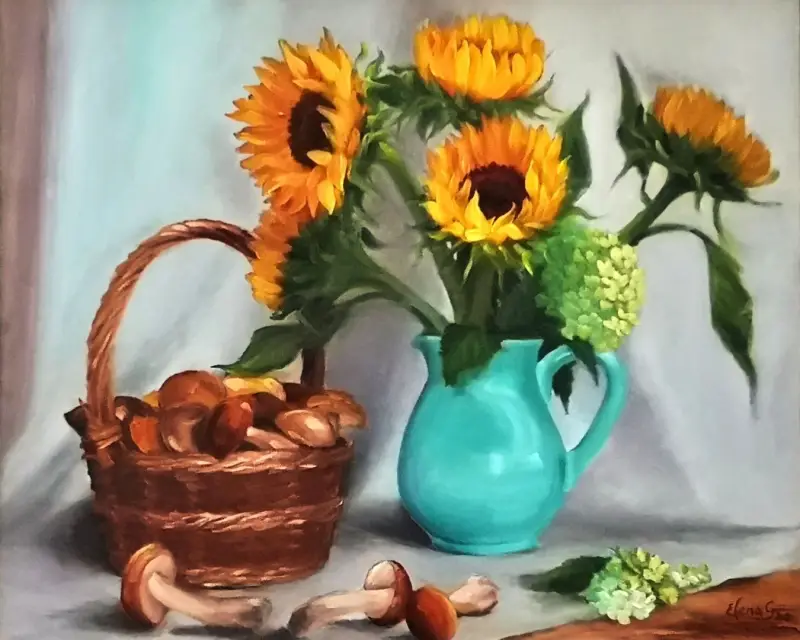
The next morning—right at the opening of the second day—the same man appeared alone.
He walked straight toward our booth, already pulling out his wallet.
He pointed at the same painting he liked the day before.
Bought it immediately.
No bargaining.
Paid a very solid price.
And left just as decisively.
That’s it.
There are no psychological tricks involved.
No perfect scripts.
All that matters is timing, readiness, and trust.
Final Thought: You Can’t Control the Buyer—And That’s the Point.
You can:
- Understand your audience
- Create the right atmosphere
- Be open, present, and professional
But sometimes, the buyer simply comes, buys, and leaves.
And that’s art.
Thanks for reading.
Nik.
P.S.
I conceived the blog article concept and edited it, and I utilized ChatGPT to compose the text.
Add comment
Comments