
This painting shows the bohemian nightlife of Montmartre, the world where Lautrec and Van Gogh socialized.
Artwork Details:
Artist: Henri de Toulouse-Lautrec
Year: 1892
Art Movement: Post-Impressionism
Medium: Oil on canvas
Location: Art Institute of Chicago https://www.artic.edu/
See more details about the painting: https://commons.wikimedia.org/wiki/File:Toulouse-Lautrec_-_At_the_Moulin_Rouge,_1892.jpg

The Duel That Never Happened: A Detective Tale from Montmartre.
A Strange Case Begins in Brussels.
It began like many mysteries in the art world: with whispers, a banquet table, and an insult that refused to disappear.
In February 1890, artists gathered in Brussels for the famous Les XX exhibition, a prestigious event for avant-garde painters. Among them was the fiery French artist Henri de Toulouse-Lautrec, a regular of Montmartre’s cafés and studios. Nearby hung paintings by his friend Vincent van Gogh—works still considered strange, unsettling, and even laughable by some critics at the time.
And then the insult came.
Another artist, Henri de Groux, reportedly mocked Van Gogh’s work, calling it ridiculous in front of fellow guests. The comment cut the room like a knife. Lautrec, small in stature but enormous in spirit, rose to defend his friend’s honour and challenged de Groux to a duel.
That moment would become legend.
But what really happened that night?
To answer that question, we must investigate.
The Detective of Montmartre.
Imagine Montmartre in the late 19th century: smoky cafés, absinthe glasses glowing under gaslight, and artists arguing about colour and truth.
In our story, the investigator is not a policeman but a young journalist named Émile Bernardet (a fictional character for our tale). He had come to Brussels to cover the exhibition, expecting debates about art.
Instead, he discovered something far stranger.
Word spread quickly: a duel had been declared.
Lautrec, known for painting dancers and nightlife, was not known for violence. Yet witnesses swore he had demanded satisfaction after de Groux insulted Van Gogh’s paintings.
Émile began collecting testimonies.
One painter claimed Lautrec shouted across the table.
Another insisted he calmly issued the challenge.
A third said he merely stood up, trembling with anger.
The more Émile investigated, the more confusing the case became.
Artwork Details:
Artist: Henri de Toulouse-Lautrec
Year: 1887
Art Movement: Impressionism
Medium: Pastel on board
Location: https://en.wikipedia.org/wiki/Van_Gogh_Museum
See more details about the painting: https://commons.wikimedia.org/wiki/File%3AToulouse-Lautrec_de_Henri_Vincent_van_Gogh_Sun.jpg?utm_source=chatgpt


- Van Gogh portrait by Toulouse-Lautrec showing the artist with absinthe.
This is the most important image for the story, because the duel happened when Lautrec defended Van Gogh.
The Friendship Behind the Fury.
Years earlier in Paris, Lautrec and Van Gogh had studied in the same studio under the painter Fernand Cormon. The two artists respected one another and even exhibited together in Montmartre.
Lautrec had once drawn a striking portrait of Van Gogh sitting at a café table with a glass of absinthe—capturing both the intensity and the vulnerability of the Dutch painter.
In Montmartre’s chaotic artistic world, loyalty mattered.
Van Gogh’s paintings were often misunderstood. His bold colours and restless brushwork seemed shocking to many viewers. To Lautrec, however, they were revolutionary.
So when de Groux mocked the paintings at the Brussels banquet, Lautrec saw not criticism but an attack on a friend.
And that was enough to demand a duel.
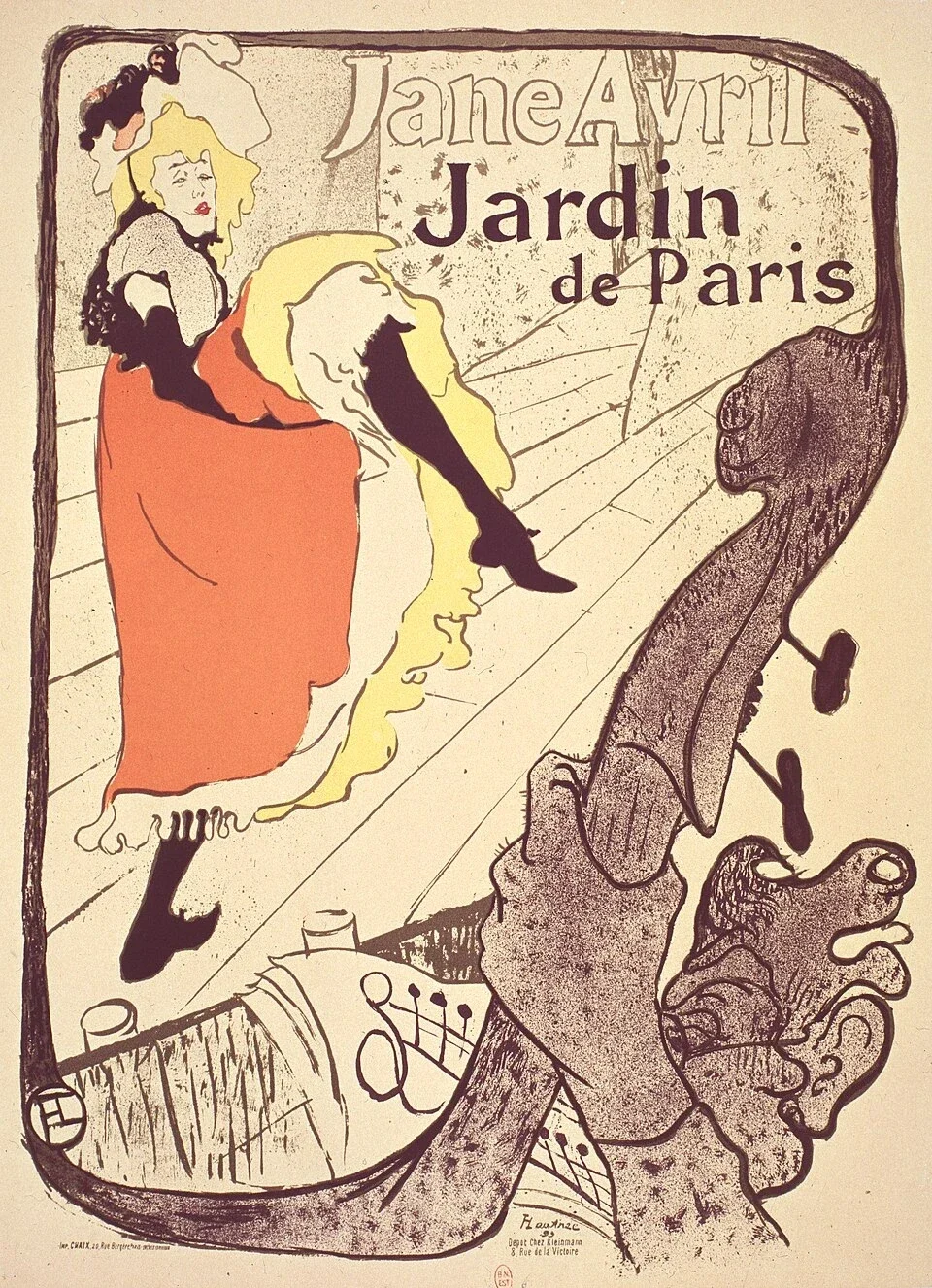
Jane Avril was one of Lautrec’s favourite subjects and part of the same artistic nightlife culture described in the story.
Artwork Details:
Artist: Henri de Toulouse-Lautrec (1864-1901)
Year: 1893
Art Movement: Art Nouveau
Medium: (Toulouse-Lautrec used lithography to create these images, blending fine art with commercial advertising.)
Location: Metropolitan Museum of Art: https://en.wikipedia.org/wiki/Metropolitan_Museum_of_Art
See more details about the poster at https://commons.wikimedia.org/wiki/File:Jane_Avril_MET_15.1r1_80X.jpg

The Investigation Deepens.
Émile expected preparations for pistols at dawn.
Instead, something unusual happened.
No location was announced.
No seconds were appointed.
No weapons were chosen.
The duel seemed to exist only in conversation.
Émile's questioning of the artists from the exhibition committee revealed another twist: several painters had confronted de Groux after his remark.
Among them was Paul Signac, who reportedly declared that he would continue the fight if Lautrec were killed.
Suddenly, the scandal threatened to overshadow the exhibition itself.
The organizers had a decision to make.
Artwork Details:
Artist: Henri de Toulouse-Lautrec (1864–1901)
Year: 1891
Art Movement: The large poster used simplified, flat colour blocks, bold silhouettes, and high-contrast, dramatic lighting (3,000 copies were displayed in Paris).
Medium: Lithograph printed in four colours. Three sheets of wove paper.
Location: The Metropolitan Museum of Art. https://en.wikipedia.org/wiki/Metropolitan Museum of Art
See more details about the poster: https://commons.wikimedia.org/wiki/File%3A Henri de_Toulouse-Lautrec%2C_Moulin_Rouge_-_La_Goulue%2C_1891_-_The_Metropolitan_Museum_of_Art.jpg?utm_source=chatgpt.com


This poster made Lautrec famous and represents the artistic revolution happening around him and Van Gogh.
The Unexpected Turn.
The next day, Émile showed up there, anticipating a commotion.
As opposed to that, he felt relief.
An apology had come from Henri de Groux.
The committee of the exhibition suspended him from the group, and the conflict dissolved before any duel could occur.
No pistols.
No blood.
No tragic headlines.
The duel had evaporated.
Artists returned to their paintings, critics returned to their arguments, and the strange tension that filled the banquet hall the night before lifted like fog over the city.

This painting captures the dramatic atmosphere of Parisian nightlife, similar to the tension in your story’s banquet scene.
Artwork details :
Artist: Henri de Toulouse-Lautrec
Year: 1892
Art movement: Post-Impressionism
Medium: Oil and gouache on cardboard
Location: (Metropolitan Museum of Art) https://en.wikipedia.org/wiki/Metropolitan Museum of Art
See more details about the painting:
https://commons.wikimedia.org/wiki/File%3AL_Anglais_au_Moulin_Rouge.jpg?utm_source

The Twist No One Expected.
Émile’s investigation ended with an unexpected realization.
The duel had never truly been about violence.
It was about loyalty.
In a world where artists were constantly competing, criticizing, and struggling for recognition, Lautrec had done something rare: he publicly defended another painter’s vision.
And the room—full of rivals and skeptics—had ultimately chosen peace over pride.
Van Gogh’s paintings remained on the walls.
The exhibition continued.
And somewhere, Lautrec likely returned to Montmartre to sketch dancers and singers beneath the glowing lights of Paris.
The duel that never happened became a quiet victory.
Not for pride.
But for friendship.
Nik, blogger, art history lover.
I conceived the blog article concept and edited it, and I utilized ChatGPT to compose the text.
Add comment
Comments