Now I Know Whom I Can Trust.
The little system I discovered at the exhibition gave me something I had been missing: a way to look at a painting with more confidence.
First of all, I must trust myself.
Yes, yes, beloved self.
That may sound like a rather obvious thing to say, but after everything we have discussed so far, I think it is worth repeating.
The little system I discovered at the exhibition gave me something I had been missing: a way to look at a painting with more confidence.
But, like any new skill, it takes a little practice.
The more we use our eyes, the more we notice.
And the more we notice, the more we understand what we actually like.
A little knowledge doesn't hurt
Of course, some knowledge about art can be extremely useful.
There are wonderful blogs, interesting YouTube videos, books, museum collections, and all kinds of other resources available to us.
Don't worry.
I am not about to recommend that you spend the next three years studying art history and memorizing the names of every painter who ever lived.
Absolutely not.
Whatever you have done in your life, a little knowledge about art simply adds another layer of enjoyment.
And fortunately, it doesn't belong to that unfortunate category of knowledge where the more you know, the less you sleep.
Quite the opposite.
The more you see, the more interesting things become.
So go to art fairs.
Visit galleries.
Visit museums.
Especially when you travel.
If you have an hour in a museum, don't feel that you must see everything. Choose a few paintings that catch your attention and spend some time with them.
Ask yourself why.
What stopped you?
The colour?
The light?
The composition?
The subject?
The atmosphere?
Or perhaps something you cannot quite explain?
That last possibility is perfectly acceptable.
You don't always have to know why you like something before you are allowed to like it.
Something interesting begins to happen.
The more art you see and the more carefully you look at it, the better you begin to understand yourself.
And this is where the whole subject becomes much more interesting.
You are no longer simply looking for a painting to fill an empty wall.
You are gradually developing your own understanding of how you want your home to feel.
You begin to realize that you are not choosing a collection of colour spots.
You are creating a visual environment that reflects something about you.
Your memories.
Your temperament.
Your preferences.
Your sense of beauty.
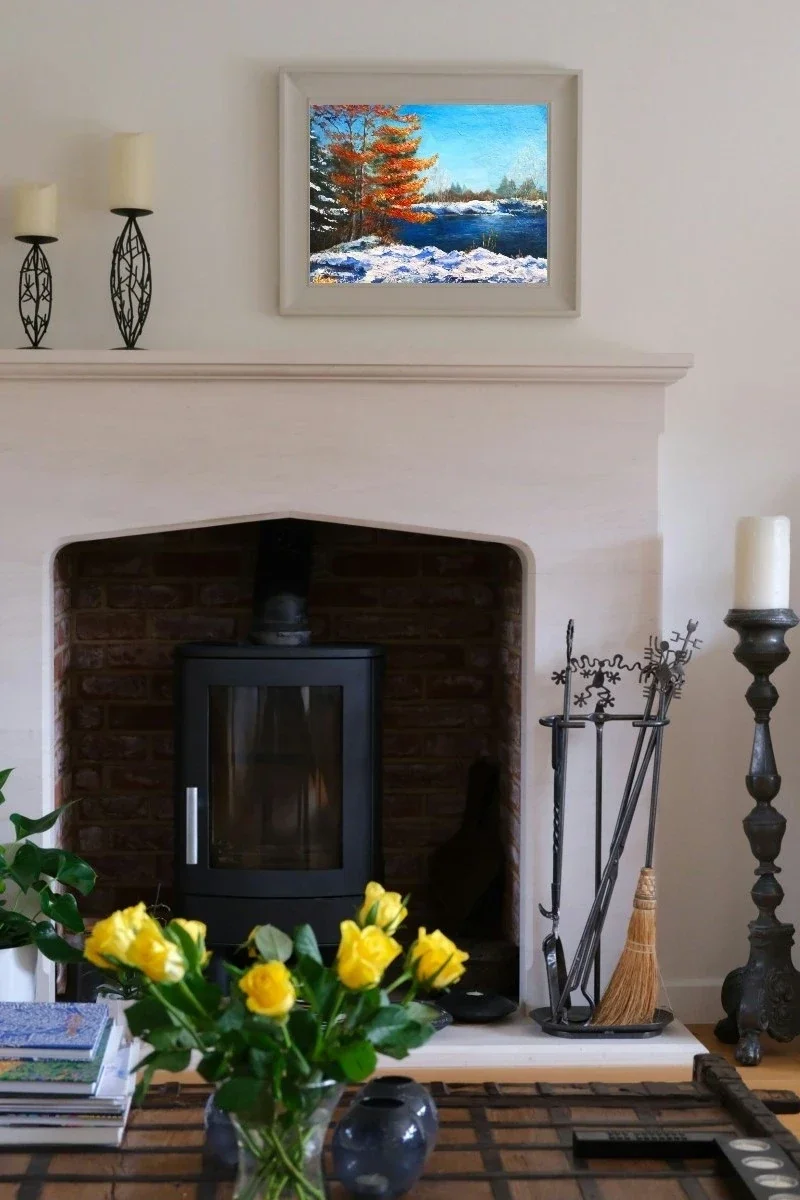
Original oil painting "March in Ontario" by ElenaG found a new home in Ireland a few years ago.
Your need for calm—or perhaps for energy—remains. And eventually, when someone visits your home and says, "What a beautiful painting!" you smile.
Of course you are pleased. We are all human.
But somewhere inside, you are also thinking, "Yes." And I know exactly why I chose it.
And then you discover a whole new vocabulary.
With experience, some concepts that once sounded rather intimidating begin to make sense.
Define Your Theme or Style.
Consider Your Space.
Create Visual Flow.
Balance and Contrast.
Diversity of Styles and Mediums.
Balance of Scale and Proportion.
These may sound like terms from an interior-design textbook at first.
But once you have looked at enough paintings and interiors, you'll start to see what they mean, or you can check out the last pages of our Visual Placement Guide:
https://drive.google.com/file/d/1Cf-JVOtP2mAXcTnF-zQtpI4IX97C3MpQ/view?usp=sharing
There, you can find the meanings of those definitions.
You start noticing why one painting feels perfectly at home in a particular room while another, although beautiful in its own right, seems to be speaking a completely different language.
You begin to understand proportion.
You notice how colours communicate with one another.
You see how a painting can quietly connect different parts of a room.
And, perhaps most importantly, you develop your own opinion.
You no longer need somebody standing beside you saying,
"This is the one you should buy."
You can listen to other opinions.
You can learn from people with more experience.
You can even disagree with them.
And that's perfectly fine.
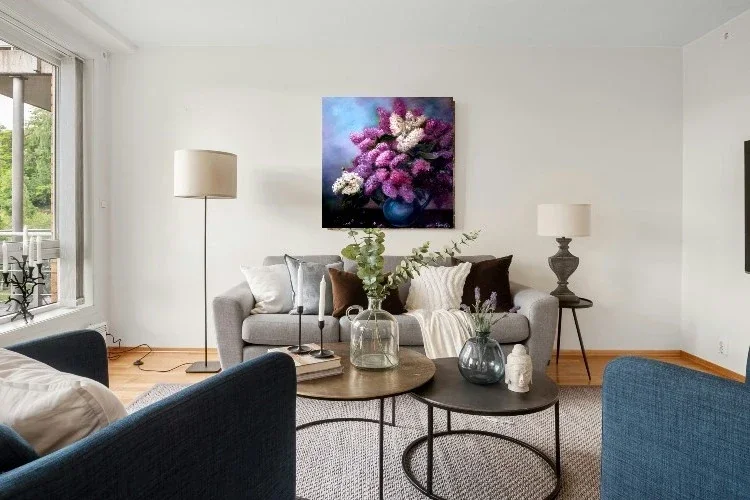
The original oil painting "Bee Happy. Lilac" by ElenaG was bought by an interesting pair from Cookstown at an art show. Later, we became friends.
Because behind your decision is something much more valuable than somebody else's approval.
Your own experience.
So whom can you trust?
Perhaps the answer is simpler than I thought.
You can trust people who help you understand art without telling you what you must like.
You can trust people who explain rather than impress.
You can trust artists who are willing to talk about their work.
And you can trust yourself when you have given yourself enough experience to listen to your own reaction.
Because that, in the end, is what this whole journey is about.
Not becoming an art professor. Not following fashion. Not impressing your friends.
And certainly not buying a painting simply because somebody told you that it is important.
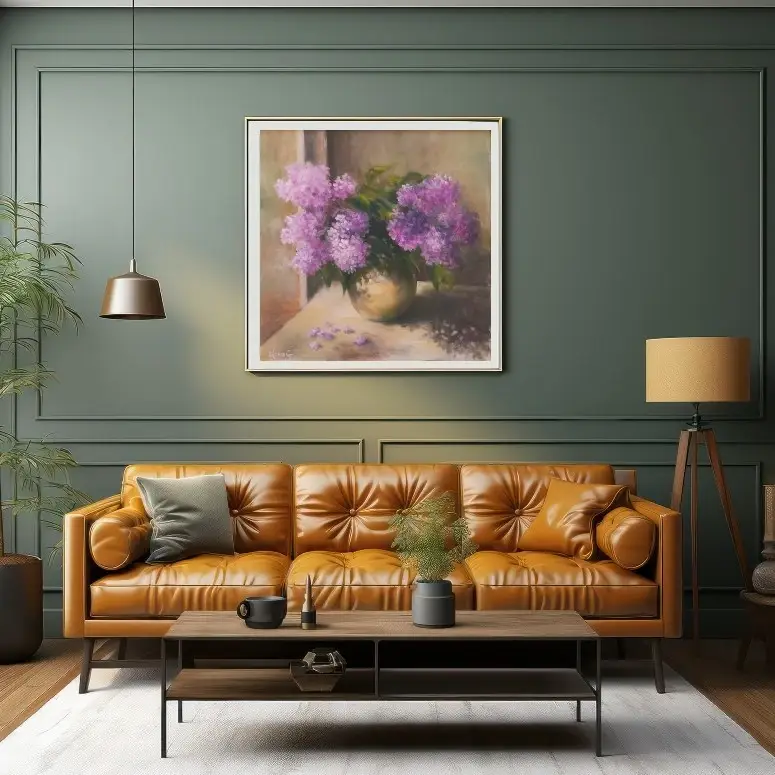
A famous musician purchased the original oil painting “My Lovely Lilac” by ElenaG. She discovered us on Facebook.
It is about developing the confidence to look at a painting and say:
“I understand what I see. I know what I feel. And I know why I want this painting in my home.”
And all of this begins with one very simple decision.
You decide to trust yourself.
But there is still one question.
What happens when you have found a painting you love, understand why you love it, and are ready to bring it into your home?
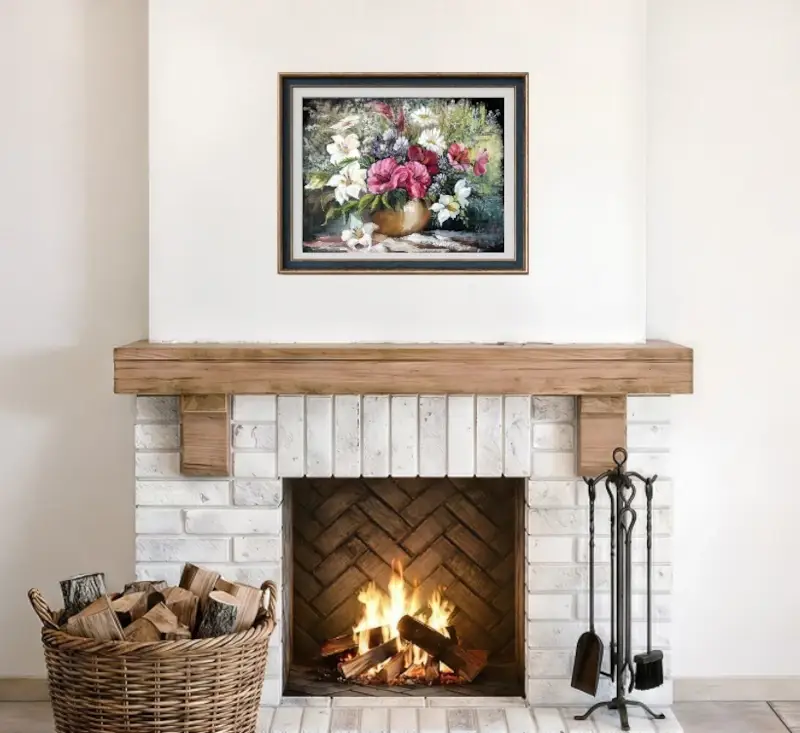
A few years ago, the original oil painting by ElenaG came to Latvia.
How can you be sure that your choice will work—not just in your head, but in reality?
This is when the experiences of other individuals become really interesting. To Be Continued (Please tap the red button below):